
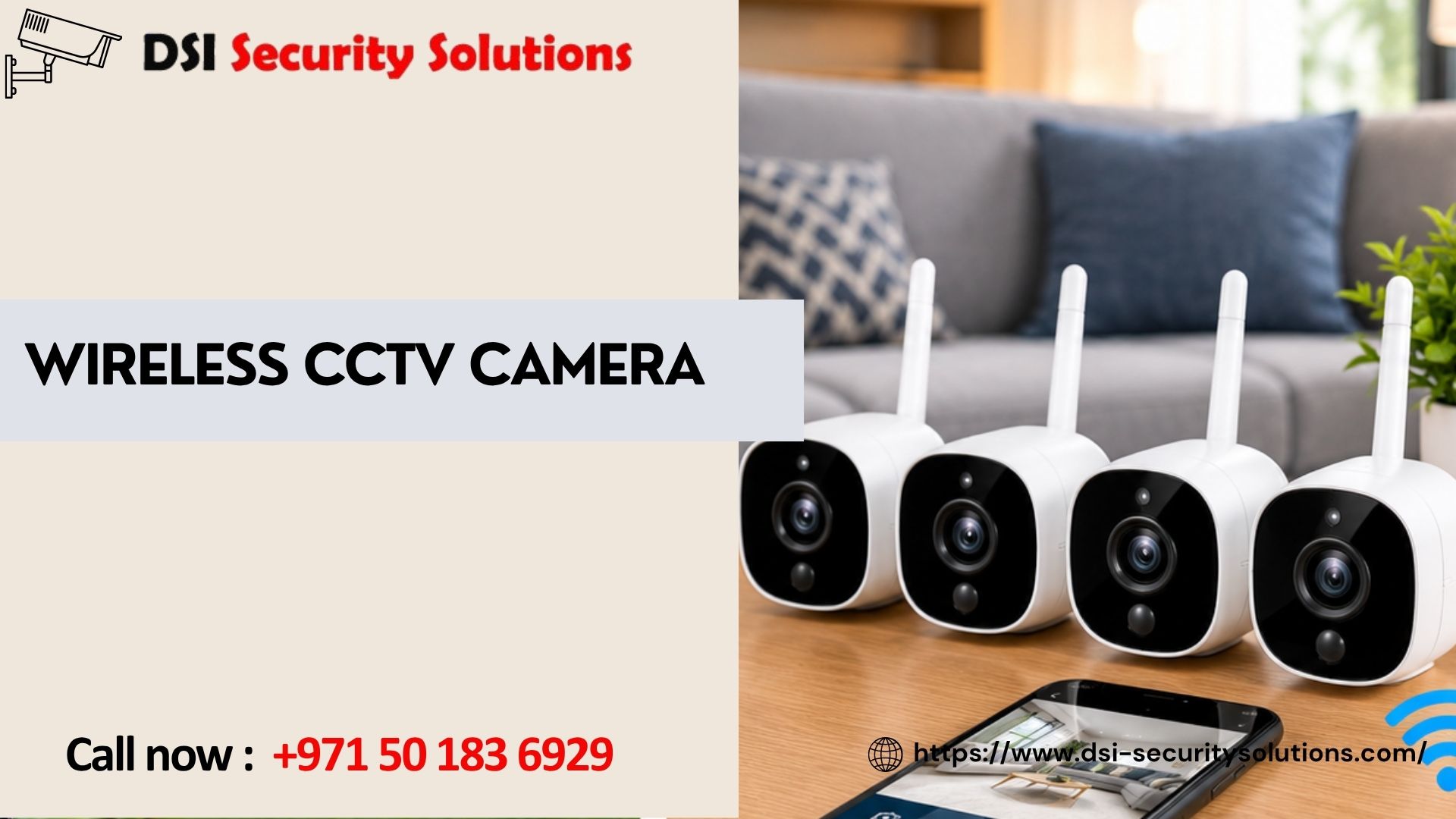
Wireless CCTV Camera Systems: Flexible Surveillance Without the Cabling
A wireless CCTV camera has become one of the most practical ways to add surveillance to a property without the cost and disruption of running cables through walls, ceilings or across a yard. Whether you’re protecting a villa, a retail unit, a warehouse office, or a rented apartment where structural changes aren’t an option, wireless CCTV offers a faster, more flexible path to real coverage. DSI Security Solutions supplies and installs wireless CCTV camera systems across Dubai for homes, businesses and industrial sites, matching the right equipment and configuration to each property.
This guide explains how wireless CCTV cameras work, where they genuinely make sense, where they fall short, and what to look for before you invest in a system.
What Is a Wireless CCTV Camera?
A wireless CCTV camera transmits video over Wi-Fi rather than through a data cable running back to a recorder. Most units still need a power source, either mains power, a rechargeable battery, or solar charging, so “wireless” generally refers to the data connection rather than the camera being entirely cable-free. Footage is typically stored in the cloud, on a local hub, or on a memory card inside the camera itself, and is accessible through a mobile app for live viewing and playback.
How Wireless CCTV Differs From Traditional Wired Systems
Traditional CCTV relies on coaxial or network cabling run from each camera back to a DVR or NVR, which provides a stable, uninterrupted connection but requires more extensive installation work. Wireless CCTV skips the data cabling entirely, relying on Wi-Fi to carry the video feed instead. This makes wireless cameras significantly faster and less disruptive to install, particularly in finished properties or rented spaces, though it introduces a dependency on signal strength that wired systems don’t have.
Benefits of Choosing a Wireless CCTV Camera System
Faster, less disruptive installation. Without cable runs to plan and install, wireless cameras can often be mounted and connected within a fraction of the time of a wired system.
Flexible placement. Cameras can go almost anywhere with power and Wi-Fi coverage, including gates, garden walls and locations where cabling would be impractical.
Easy to expand. Add more cameras later without reworking existing wiring, useful for properties where security needs might grow over time.
Ideal for rented or leased properties. Tenants who can’t modify a building’s structure can still install wireless cameras and take them along when they move.
Remote access as standard. Nearly all wireless CCTV systems include an app for live viewing, alerts and recorded footage from anywhere.
Where Wireless CCTV Cameras Make the Most Sense
Villas and homes, particularly for garden, driveway and perimeter coverage where cabling to a central recorder would mean extensive trenching or wall penetration.
Rented apartments, where structural changes aren’t permitted but tenants still want meaningful coverage of a front door or balcony.
Retrofit projects, adding cameras to an existing, finished building without disrupting walls or ceilings.
Temporary sites, such as construction perimeters or short-term rental properties, where a permanent wired installation isn’t justified.
Hard-to-reach areas, including garden walls, detached structures or outbuildings where running cable back to a main recorder is impractical.
Where Wireless CCTV Has Limitations
Wireless CCTV isn’t the right fit for every situation. Consider a wired or hybrid approach when:
- The property has poor or inconsistent Wi-Fi coverage in the areas where cameras are needed, since even the best camera performs poorly over an unreliable connection
- Continuous, uninterrupted recording is essential, such as for a bank or high-security facility, where wired systems offer more consistent uptime
- A large number of cameras are needed, since many wireless cameras competing for bandwidth on the same network can strain Wi-Fi performance
- Battery maintenance isn’t practical, for example at a high-traffic entrance where frequent recharging would leave gaps in coverage
Many properties address this by using a hybrid setup: wired cameras at fixed, high-priority points, combined with wireless units for flexible or hard-to-reach areas.
Key Features to Look for in a Wireless CCTV Camera
Resolution
1080p is a reasonable baseline, while 2K or 4K cameras offer clearer detail for identifying faces or vehicle number plates, particularly useful at entrances and gates.
Night Vision
Standard infrared night vision is common, but colour night vision technology captures more detail after dark, which matters for most outdoor applications.
Power Options
Battery-powered cameras are the simplest to install but need periodic recharging. Mains-powered or solar-charged cameras run continuously, which suits high-traffic or high-priority locations better.
Storage
Cloud storage offers accessibility from anywhere, usually with a subscription fee, while local storage via a memory card or hub avoids ongoing costs but has limited capacity and less resilience if the camera is tampered with. Many systems support both.
Weatherproofing
For outdoor use in Dubai, a proper IP rating is essential to withstand heat, dust and occasional heavy rain without the camera’s performance degrading over time.
Smart Motion Detection
Cameras that distinguish between people, vehicles and general movement produce far more useful alerts than basic motion sensors, which can be triggered by wind, shadows or passing traffic.
Wi-Fi Range and Mesh Compatibility
Check how far each camera can be from your router before signal weakens, and consider whether a mesh Wi-Fi network is needed for cameras placed further from the main access point.
Wireless CCTV for Businesses
Wireless CCTV isn’t limited to homes. Many Dubai businesses use wireless cameras for:
- Retail pop-ups and temporary spaces, where a permanent wired system isn’t justified
- Small offices, covering entrances and shared spaces without disrupting fit-out work
- Construction sites, monitoring equipment and material storage during a project’s duration
- Additional coverage for existing wired systems, extending surveillance to areas added after the original installation
For permanent commercial and industrial installations with many cameras, a wired or IP network-cabled system is often still the more practical long-term choice, but wireless remains valuable for flexible or temporary coverage needs.
Setting Up a Wireless CCTV Camera System Properly
Getting real value from a wireless system depends on more than simply mounting the camera and connecting to Wi-Fi. Important steps include:
- Testing Wi-Fi signal strength at each intended camera location before final installation
- Positioning cameras to avoid glare, direct sunlight and obstructions that reduce footage quality
- Configuring motion zones so alerts focus on relevant areas rather than every passing car or tree branch
- Securing the camera account with a strong password and two-factor authentication where available
- Planning storage to match how long you need to retain footage for review
Why Professional Installation Improves Wireless CCTV Performance
Wireless cameras are marketed as simple, self-install products, but professional installation consistently delivers better real-world results. A qualified installer will:
- Survey your property to confirm genuine Wi-Fi coverage at each proposed camera location
- Recommend extenders or a mesh network where signal strength is weak
- Position cameras correctly to avoid common issues like glare and blind spots
- Configure motion zones and alerts to reduce false notifications
- Set up secure remote access and, where relevant, integrate with existing doorbells, alarms or access control
Our Wireless CCTV Camera Services in Dubai
Free consultation and site assessment. We review your property and Wi-Fi coverage before recommending equipment.
Equipment selection. We recommend wireless cameras suited to your specific property, budget and climate exposure.
Professional installation. Correct placement, signal testing and configuration at every camera location.
App setup and training. We make sure you’re confident using the system for live viewing, alerts and playback.
Integration services. Connecting wireless cameras with existing alarms, access control or smart home systems where relevant.
Ongoing support. Help with troubleshooting, repositioning or expanding your system as your needs evolve.
Frequently Asked Questions
Does a wireless CCTV camera still need a power source?
In almost all cases, yes. “Wireless” generally refers to the data connection over Wi-Fi, while the camera itself still needs power from a battery, mains connection, or solar charging.
How far can a wireless CCTV camera be from my router?
This varies by camera and property construction, but signal typically weakens beyond 10 to 15 metres or through thick walls. A mesh Wi-Fi network can help maintain reliable connections for cameras placed further away.
Is wireless CCTV as reliable as a wired system?
Wireless CCTV can be very reliable with proper Wi-Fi coverage and correct installation, but it does depend on network stability in a way wired systems don’t. For mission-critical, continuous coverage, a wired or hybrid setup is often preferred.
Can wireless CCTV cameras work without internet access?
Most core features, including remote viewing and cloud storage, require an internet connection. Some cameras can still record locally to a memory card without internet, though remote access won’t be available during an outage.
How many wireless CCTV cameras can I run on one Wi-Fi network?
This depends on your router’s capacity and overall network usage. Running many wireless cameras on a single network can strain bandwidth, so larger installations sometimes benefit from a dedicated network or mesh system.
Are wireless CCTV cameras suitable for outdoor use in Dubai?
Yes, provided they carry an appropriate weatherproof and dust-resistant rating designed for outdoor conditions, which is essential given Dubai’s heat and dust.
Can I mix wireless and wired cameras in the same system?
Yes, many properties use a hybrid approach, with wired cameras at fixed, high-priority points and wireless cameras covering more flexible or hard-to-reach areas, often managed through the same app or platform.
Is professional installation necessary for a wireless CCTV camera?
It’s not strictly required, but professional installation typically results in better camera placement, more reliable Wi-Fi performance and properly configured alerts, which noticeably improves day-to-day usefulness.
Whether you’re protecting a home, a small business, or a temporary site, a properly planned wireless CCTV system delivers real, reliable coverage without the disruption of cabling work. Contact DSI Security Solutions today for a free consultation and recommendation.