
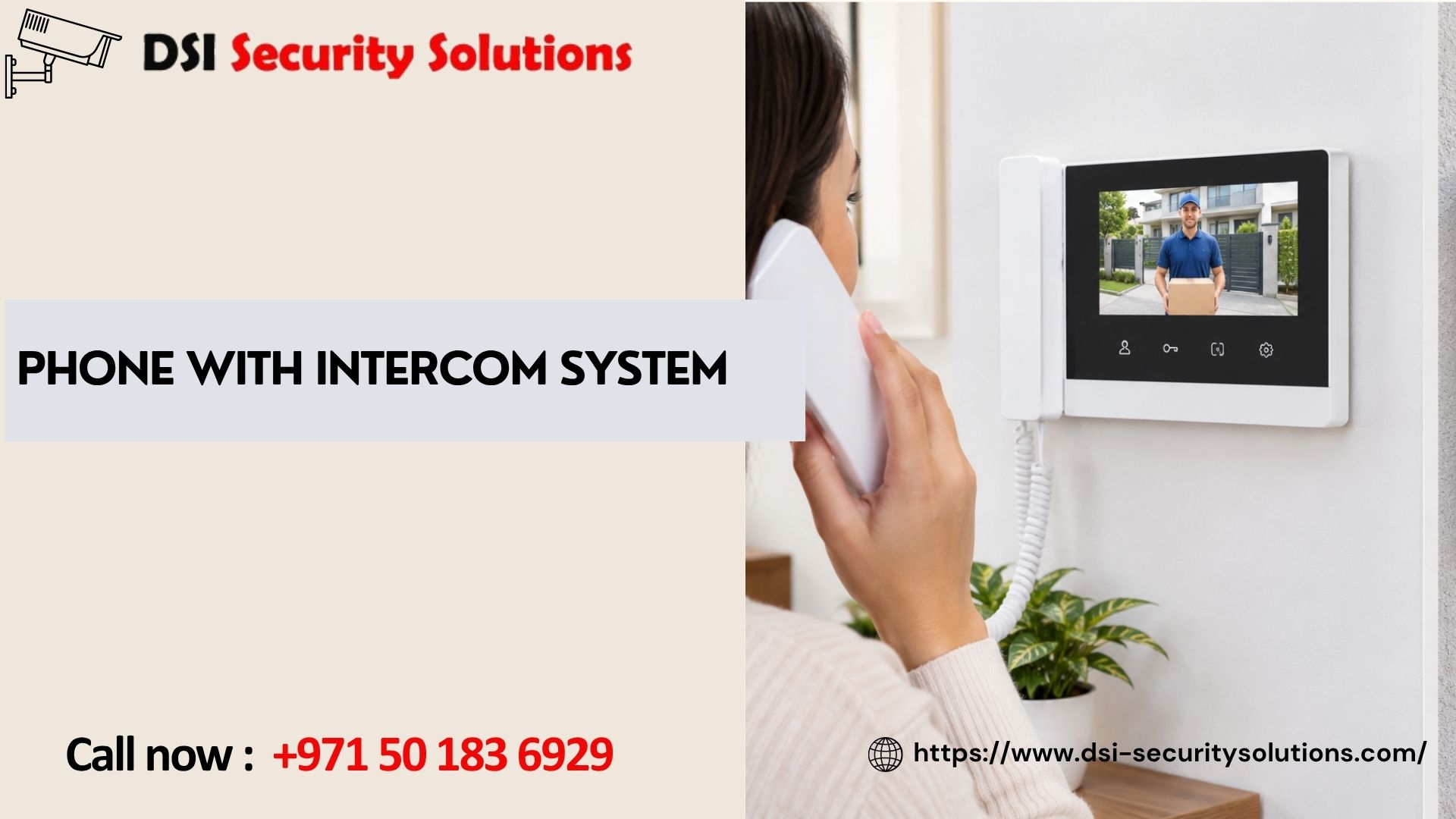
Phone with Intercom System: Smarter Communication and Access Control for Any Property
Missed deliveries, unanswered doorbells, shouting across a warehouse, walking to the gate just to see who is there. Everyday communication problems like these waste time and weaken security. A phone with intercom system solves them in one reliable setup.
By combining a standard telephone with built-in intercom features, you can talk to visitors, colleagues and family members from the same handset you already use. You can see who is at the entrance, speak to them clearly and, in many systems, unlock the door without leaving your desk or sofa.
At DSI Security Solutions, we help homeowners, property managers and businesses choose, install and support intercom phone systems that are dependable and easy to use. This guide explains how they work, the types available and how to pick the right one.
What Is a Phone with Intercom System?
A phone with intercom system lets a telephone handset or desk phone act as both a regular phone and an internal or door-entry intercom. Instead of buying separate devices for calls and for talking to a gate, front door or another room, you manage everything from one place.
Depending on the model, a single system can:
- Make and receive external phone calls
- Call other rooms, departments or floors
- Answer a door station or gate panel
- Broadcast announcements through paging
- Release an electric door lock or gate
- Connect with CCTV, access control and alarm systems
This flexibility is why the intercom phone system is popular in villas, apartment buildings, offices, clinics, schools and factories.
How Does an Intercom Phone System Work?
An outdoor door station, with a microphone, speaker, call button and often a camera, is connected to one or more indoor phones. When a visitor presses the button, the indoor phone rings. You answer, talk to the visitor and, if you choose, trigger the door release.
The connection can run over:
- Analog wiring: Reliable and cost-effective for smaller sites.
- IP networks (Ethernet or PoE): Audio and video travel over your network, making the system easy to scale and integrate.
- SIP and VoIP: The intercom registers with your business phone system, so door calls ring on desk phones, softphones or mobile apps.
- Wireless links: Useful for outbuildings or large estates where new cabling is difficult.
Types of Phone Intercom Systems
Analog Audio Intercom Phones
Straightforward, durable and affordable. They suit small homes, shops and offices that need clear two-way voice communication and door release.
Video Door Phone Intercoms
A camera on the entry panel and a screen indoors let you see and speak to visitors before opening the door, which greatly improves security.
IP and SIP Intercom Systems
IP systems use your network for HD audio and video and allow remote management. A SIP intercom connects directly to your VoIP or PBX system, so receptionists and staff can answer door calls from desk phones or smartphones wherever they are.
Wireless and Cordless Intercom Phones
Wireless handsets let you move around the property while still answering the front door or gate. They suit large homes, farms and multi-building sites.
Multi-Station Office Intercom Systems
These connect many phones across departments, with group calling, paging and priority lines for busy offices, hotels and hospitals.
Key Benefits of a Phone with Intercom System
Stronger security. Screening visitors before granting access reduces the risk of unauthorized entry. With video and event records, you also know who came and when.
Convenience and comfort. You do not need to walk to the entrance for every visit. Elderly residents, people with mobility challenges and busy staff benefit the most.
Faster internal communication. One press connects you to the right person, instead of walking between rooms or dialing extensions.
A better visitor experience. Businesses can greet visitors professionally, direct deliveries and manage restricted areas smoothly.
Cost efficiency. One integrated system often costs less than separate phone, intercom and entry systems, and reduces cabling and maintenance.
Scalability. Modern systems let you add handsets, door stations and cameras as your needs grow.
Features to Look for in an Intercom Phone System
- Audio quality: Full-duplex sound with noise reduction and echo cancellation keeps conversations clear in busy or windy places.
- Video resolution and night vision: HD video and infrared matter for 24/7 visibility.
- Door and gate release: Confirm support for your electric locks, magnetic locks or gate motors.
- Mobile app access: Answer calls and unlock doors from your smartphone when away.
- Integration: Check compatibility with CCTV, access control, alarms and smart-home platforms.
- Weather and vandal resistance: Outdoor stations should withstand dust, rain, heat and tampering.
- Capacity: Choose a system that can handle more users, floors or entry points later.
- Power options: PoE and backup power keep the system online during outages.
Where Are Phone Intercom Systems Used?
Homes and villas: See who is at the gate, talk to delivery drivers and let guests in safely.
Apartment buildings: Each unit gets an indoor phone, and visitors call the right resident from a central panel.
Offices: Reception staff screen visitors, and employees communicate quickly across floors.
Warehouses and factories: Rugged intercoms with paging and strong speakers help teams coordinate in loud environments.
Healthcare, schools and hotels: Controlled access and fast staff communication keep people safe and services running smoothly.
Phone with Intercom vs. Standalone Intercom
A standalone intercom handles only internal or door communication. A phone with intercom system blends intercom features with full telephony, so you can take an outside call and then immediately page a colleague or answer the gate from the same device.
If you only need a basic buzzer at the entrance, a standalone door intercom may be enough. If you want fewer devices, streamlined communication and better integration with your phone network, an intercom phone system is usually the smarter choice.
How to Choose the Right System
- Assess your site. Count the entry points, rooms or floors to connect, and note whether the area is indoors, outdoors or both.
- Define your goals. Decide whether security, convenience or staff coordination matters most.
- Choose wired or wireless. Wired is generally more stable, while wireless offers flexibility.
- Decide on audio or video. Video adds a major security layer for main entrances.
- Check compatibility. Make sure it works with your existing phones, locks, cameras and network.
- Plan for growth. A little extra capacity now saves costly upgrades later.
Professional Installation and Maintenance
Even the best system underperforms if installed poorly. Professional installation ensures correct cabling, proper placement of door stations, accurate network setup and secure integration with locks and cameras. Routine checks of microphones, speakers, cameras and door-release mechanisms catch small problems early, while firmware updates keep the system secure.
Why Choose DSI Security Solutions?
- Needs-based recommendations: We assess your property and suggest only what you need.
- Wide system options: From simple audio intercoms to advanced IP and video intercom phone systems.
- Clean, professional installation: Neat cabling, tested connections and a clear handover.
- Integration expertise: We connect intercoms with CCTV, access control and alarms for one unified setup.
- Ongoing support: Maintenance and technical help when you need it.
Frequently Asked Questions About Phone with Intercom Systems
What is a phone with intercom system used for?
It lets you make regular phone calls while also communicating between rooms or departments and answering door or gate stations. Many systems also unlock doors remotely.
Can I answer the door from my mobile phone?
Yes. Many IP and SIP systems offer mobile apps or call forwarding, so you can see and speak to visitors and open the door from your smartphone.
What is the difference between an intercom phone and a video door phone?
An intercom phone is mainly for voice communication, while a video door phone adds a camera and screen so you can see the visitor. Many modern systems combine both.
Do I need new wiring to install one?
It depends. Analog systems usually need dedicated low-voltage cabling. IP systems can often use a suitable existing network, and wireless options reduce cabling in hard-to-reach areas.
Can it connect to my existing business phone system?
In most cases, yes. SIP-compatible intercoms integrate with VoIP and PBX systems, so door calls ring on desk phones, softphones or mobile devices.
Will it work during a power outage?
Standard systems need power, but backup batteries or a UPS can keep them running. PoE systems on a backed-up network switch can also continue during short outages.
Is it suitable for homes as well as businesses?
Absolutely. Homeowners use them for gate and door communication, while businesses use them for visitor control, staff communication and secure access.
How much does a phone with intercom system cost?
Cost depends on system type, number of stations, video capability, integration needs and installation complexity. A site assessment is the best way to get an accurate quote.
Get a Phone with Intercom System Tailored to Your Property
Clear communication and controlled access should not be complicated. The right phone with intercom system keeps your home or business connected, secure and efficient every day.