
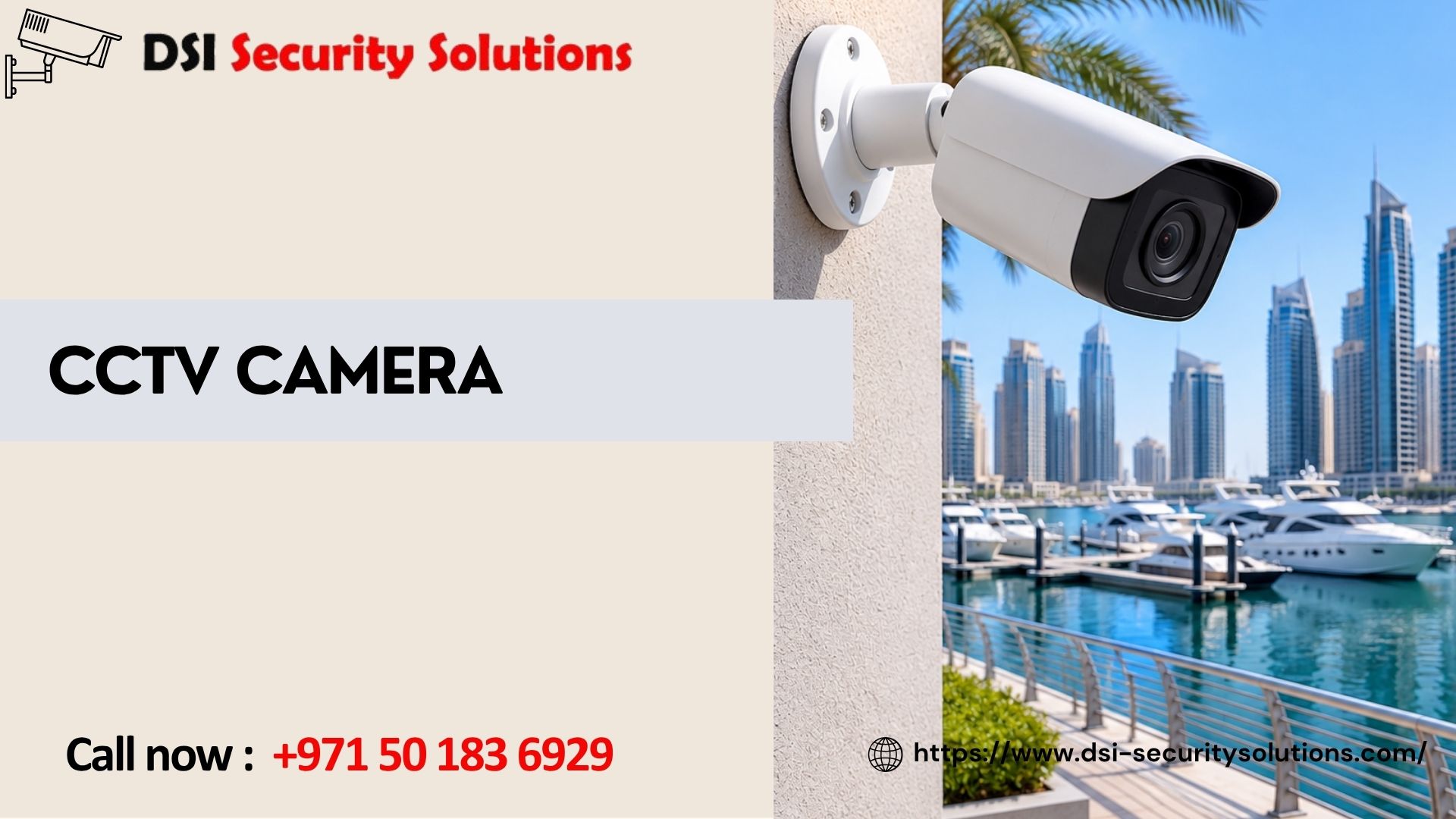
CCTV Camera Solutions in Dubai: Clear Visibility, Reliable Protection
Whether you run a shop, manage a warehouse, own a villa or oversee a residential tower, knowing what’s happening on your property at all times is one of the most effective ways to prevent theft, deter trespassers and resolve incidents quickly. A well-planned CCTV camera system does exactly that. It records evidence, discourages crime and lets you monitor your premises from anywhere.
At DSI Security Solutions, we supply, install and maintain CCTV camera systems across Dubai for homes, businesses and industrial sites. This page explains how modern surveillance works, which camera types suit which needs, and what to look for before you invest.
What Is a CCTV Camera System?
CCTV stands for closed-circuit television. Unlike a broadcast signal, the video from a CCTV camera goes to a specific set of monitors and recorders you control. A complete system usually includes:
- Cameras that capture video
- A recorder (DVR or NVR) that stores footage
- Storage drives sized to your retention needs
- Cabling or network equipment that carries video and power
- Monitors or mobile apps for live viewing and playback
Today’s systems go well beyond basic recording. They offer high-definition images, remote viewing on your phone, motion alerts and integration with alarms and access control.
Why Dubai Properties Invest in CCTV Cameras
Dubai is safe, but that doesn’t remove the need for good security. Property owners choose CCTV for practical reasons:
Deterrence. Visible cameras make would-be intruders think twice.
Evidence. Clear footage supports police reports, insurance claims and internal investigations.
Remote monitoring. You can check your shop, site or home from your phone, even when travelling.
Staff and operational oversight. Cameras help managers review workflows, safety compliance and customer service.
Safety. Monitoring entrances, car parks and stairwells helps protect residents, employees and visitors.
Peace of mind. Knowing your property is watched around the clock reduces day-to-day worry.
Types of CCTV Cameras We Install
Choosing the right camera for the right location makes a big difference in image quality and long-term value.
Dome Cameras
Compact and discreet, dome cameras are popular indoors in offices, shops, corridors and lobbies. Their design makes it hard to tell which way they point, and they resist tampering.
Bullet Cameras
Bullet cameras have a longer, visible shape that works well outdoors. They’re often used at entrances, perimeter walls and car parks, where visibility acts as a deterrent.
PTZ (Pan-Tilt-Zoom) Cameras
PTZ cameras can rotate, tilt and zoom, either manually or automatically. They suit large open areas such as yards, parking lots and warehouses, where one camera can cover a wide space.
IP Cameras
IP cameras send digital video over a network. They deliver sharp resolution, flexible installation and easy scaling. Most new commercial projects use IP technology.
Analog HD Cameras
High-definition analog systems reuse existing coaxial cabling, which can reduce upgrade costs for older buildings while improving image quality.
Wireless and Wi-Fi Cameras
These are useful where running cable is difficult, such as small shops, rental properties or temporary sites. Reliable Wi-Fi coverage and power are still needed.
Night Vision and Thermal Cameras
Infrared night vision keeps images clear in low light. Thermal cameras detect heat signatures, which is useful for perimeter protection at large or high-risk sites.
ANPR Cameras
Automatic number plate recognition cameras read vehicle plates at gates and car park entries, which helps with access management and traffic records.
Key Features to Look for in a CCTV Camera
Resolution. Higher resolution means clearer detail. 2MP (1080p) suits many applications, while 4MP, 5MP or 8MP cameras help when you need to identify faces or plates at greater distance.
Low-light performance. Look for infrared LEDs or “colour at night” technology so footage remains useful after dark.
Wide dynamic range (WDR). WDR balances bright and dark areas in the same scene, such as a doorway facing strong sunlight, which is common in Dubai.
Weatherproofing. Outdoor cameras should be rated for dust, water and extreme heat. An IP66 or IP67 rating is a good benchmark.
Smart analytics. Features like motion detection, line crossing, intrusion alerts and people counting cut down on time spent reviewing footage.
Audio. Two-way audio can help at reception points or gates.
Remote access. A secure mobile app lets you view live and recorded video anywhere.
Storage and retention. Decide how many days of footage you need, then size the drives accordingly. Higher resolution and more cameras require more storage.
Where to Place CCTV Cameras for the Best Coverage
Good placement matters as much as good equipment. Common priority areas include:
- Main entrances and exits
- Reception and cash counters
- Car parks and loading bays
- Perimeter walls and gates
- Corridors, stairwells and lifts
- Server rooms and storage areas
- Blind spots around the building
During a site survey, we assess lighting, mounting heights, angles and cable routes so every camera captures useful detail instead of wasted footage.
CCTV Solutions for Different Sectors
Homes and villas: Entrance, garden and garage coverage with mobile alerts.
Retail and restaurants: Cash points, stockrooms, entrances and customer areas.
Offices: Reception, corridors and secure zones.
Warehouses and industrial sites: Perimeters, loading docks, vehicle movement and high-value inventory.
Residential buildings: Lobbies, lifts, car parks and common areas.
Schools and clinics: Entry control and safeguarding of shared spaces.
Construction sites: Temporary systems for material and equipment protection.
Our CCTV Installation Process
- Consultation and site survey: We learn your goals, walk the property and identify risks.
- Design and quotation: You receive a camera layout, equipment list and clear pricing.
- Professional installation: Our technicians mount cameras, run cabling and set up recorders neatly.
- Configuration and testing: We adjust angles, image settings, motion zones and remote access.
- Training and handover: We show you how to view live footage, search recordings and export clips.
- Support and maintenance: Regular checks keep cameras clean, aligned and recording.
Compliance and Privacy in Dubai
CCTV use in Dubai is regulated. Depending on your type of premises, you may need to install cameras through a licensed security company and meet Dubai Security Industry Regulatory Agency (SIRA) requirements. It’s also important to place cameras responsibly, avoiding areas where people expect privacy, such as changing rooms and washrooms, and storing footage securely. We can advise on which requirements apply to your property.
What Affects CCTV Camera Cost?
Prices vary widely depending on:
- Number of cameras
- Camera type and resolution
- Indoor or outdoor conditions
- Cable lengths and installation difficulty
- Recorder capacity and storage duration
- Smart features and integrations
- New installation versus upgrade
The most accurate way to budget is a site survey. We provide free, no-obligation quotations so you know exactly what you’re paying for.
Why Choose DSI Security Solutions for CCTV Camera Installation
- Tailored design: We plan systems around your property, not a generic package.
- Quality equipment: We work with dependable brands and install them correctly.
- Neat, professional installation: Tidy cabling and correct positioning.
- Integrated security expertise: Combine CCTV with access control, alarms and fire alarm systems.
- Ongoing support: Maintenance and repair services to keep your system performing.
- Clear communication: Honest advice, transparent pricing and realistic timelines.
Frequently Asked Questions
How many CCTV cameras do I need?
It depends on your property’s size, layout and risk areas. A small shop might need four cameras, while a warehouse could need dozens. A site survey identifies the right number and placement.
What is the difference between IP and analog CCTV cameras?
Analog cameras send video over coaxial cable to a DVR, while IP cameras send digital video over a network to an NVR. IP cameras generally offer higher resolution and more flexibility, while modern analog HD systems can be a cost-effective upgrade for existing cabling.
Can I view my CCTV cameras on my phone?
Yes. Most modern systems support secure mobile apps that let you view live footage, receive alerts and play back recordings from anywhere with an internet connection.
How long can a CCTV system store footage?
Storage time depends on the number of cameras, resolution, recording mode and hard drive size. Many properties keep 30 days of footage, though requirements vary. We size storage to match your needs.
Do CCTV cameras work at night?
Yes. Most cameras include infrared night vision, and many now offer colour night footage. For very dark or large areas, additional lighting or specialised cameras may be recommended.
Are wireless CCTV cameras as good as wired ones?
Wireless cameras are convenient and quick to install, but wired systems are usually more reliable, especially for large or critical sites. We recommend the option that suits your environment.
Do I need permission to install CCTV cameras in Dubai?
Requirements depend on your property type and use. Some premises must follow SIRA regulations and use licensed installers. We can advise on what applies before installation.
How often does a CCTV system need maintenance?
Regular checks are recommended, at least once or twice a year. Maintenance includes cleaning lenses, checking recorders and storage, testing remote access and confirming that all cameras are recording.
Can CCTV be integrated with other security systems?
Yes. CCTV can be linked with access control, intruder alarms, fire alarm systems and building management platforms for a more coordinated response.