
CCTV and Alarm System Installation
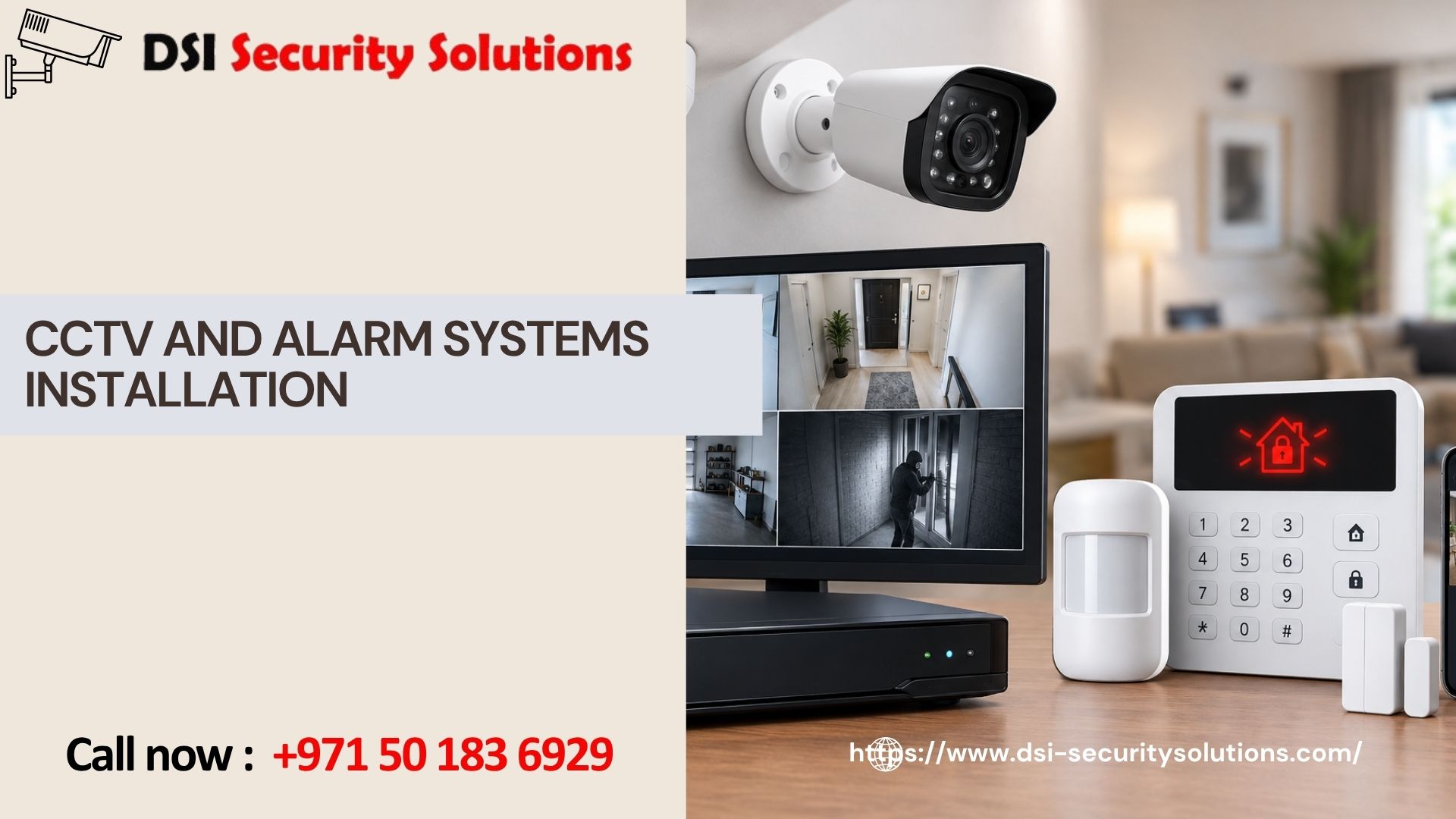
Cameras alone can show you what happened. An alarm system tells you the moment something is happening. Put the two together, and you get a security setup that actually protects your property in real time — not just after the fact. At DSI Security Solutions, we specialize in combined CCTV and alarm system installation for homes, offices, retail shops, and warehouses, designing each setup around the specific risks of your property rather than offering a generic, one-size-fits-all package.
This page walks you through how CCTV and alarm systems work together, what’s involved in a professional installation, and what to look for when choosing an installer you can rely on.
Why Combine CCTV and Alarm Systems
A lot of property owners install cameras and assume that’s enough. In practice, CCTV and alarm systems solve two different problems, and pairing them closes the gaps that either one leaves on its own.
CCTV cameras give you visual evidence — footage of who entered a property, what was taken, or how an incident unfolded. That’s valuable for insurance claims, disputes, and investigations, but it’s mostly useful after something has already happened. An alarm system, on the other hand, is built for the moment itself. Door and window sensors, motion detectors, and glass-break sensors trigger an immediate alert the instant a breach occurs, giving you or a monitoring team the chance to respond while it’s still happening, not hours later when you review the footage.
When these two systems are installed together and properly integrated, you get layered protection: the alarm interrupts an intrusion in progress, while the cameras record it, verify it, and give you a clear record for follow-up. For homes, that means peace of mind while you’re away. For businesses, it often means lower insurance premiums, faster incident response, and stronger protection for stock, equipment, and cash handling areas.
Our Installation Process
We treat CCTV and alarm installation as one integrated project, not two separate jobs bolted together.
1. Free Site Survey A technician visits your property to identify entry points, blind spots, and vulnerable areas — doors, windows, gates, storage rooms, server rooms, and anywhere else that needs coverage.
2. Custom System Design Based on the survey, we map out camera placement (dome, bullet, or PTZ) alongside alarm components such as door/window contacts, motion sensors, glass-break detectors, and a control panel — sized appropriately for your property.
3. Professional Installation Our certified technicians handle cabling, mounting, and wiring with minimal disruption to your home or business. Outdoor components are weatherproofed to handle heat, humidity, and dust without performance loss.
4. System Integration We connect your CCTV and alarm components so they work as a single system — for example, triggering camera recording automatically when a sensor is activated, or linking both to one mobile app for unified control.
5. Configuration & Remote Access Your system is set up for remote access, so you can arm/disarm the alarm, view live camera feeds, and receive real-time alerts on your phone from anywhere.
6. Testing & Handover Before we finish, we test every sensor, camera angle, and alert notification, then walk you through daily use — arming/disarming, checking footage, and managing user codes.
7. Ongoing Monitoring & Maintenance We offer maintenance plans and, where needed, connection to a monitoring center so alerts are followed up around the clock, not just when someone happens to be watching a phone screen.
What’s Included in a CCTV and Alarm System
A well-designed setup typically combines several components working together:
- CCTV Cameras – Dome, bullet, PTZ, or wireless cameras depending on indoor/outdoor needs and coverage area.
- NVR/DVR Recorders – For storing footage locally, with optional cloud backup.
- Door and Window Sensors – Detect when an entry point is opened without authorization.
- Motion Detectors – Trigger alerts when movement is detected in restricted areas, especially useful after hours.
- Glass-Break Sensors – Detect the specific sound frequency of breaking glass, useful for ground-floor windows and glass doors.
- Alarm Control Panel – The central hub for arming, disarming, and managing the system.
- Sirens and Strobes – Audible and visual deterrents that activate the moment a breach is detected.
- Mobile App Integration – Real-time alerts, live camera access, and remote arm/disarm from your smartphone.
- Access Control (optional) – Keypad, card, or biometric entry systems for an added layer of control at key doors.
We tailor this list to your property — a villa doesn’t need the same setup as a warehouse, and a retail shop has different priorities than a corporate office.
Where We Install CCTV and Alarm Systems
We provide combined CCTV and alarm installation services across a wide range of property types, including:
- Villas and residential communities
- Apartments and residential towers
- Retail shops and shopping centers
- Offices and corporate buildings
- Warehouses and logistics facilities
- Restaurants and cafes
- Schools and nurseries
- Construction sites
- Gated communities and parking areas
Whatever the property, our approach starts the same way: identify the actual vulnerabilities first, then build the system around them.
What Affects the Cost of Installation
Every property is different, so pricing for CCTV and alarm system installation depends on a few key factors:
- Number of cameras and sensors – More coverage points mean higher equipment and labor costs.
- System complexity – Integrated systems with automation (e.g., cameras triggered by sensors) typically cost more than standalone setups.
- Monitoring options – Self-monitored systems cost less upfront than systems connected to a professional 24/7 monitoring center.
- Property size and layout – Larger properties or those with multiple entry points require more cabling, sensors, and planning.
- Storage and cloud backup needs – Extended footage retention or cloud storage adds to the overall package cost.
The most reliable way to get an accurate price is a free site survey, which lets us recommend a system that matches your actual risk areas instead of over- or under-selling equipment you don’t need.
Why Choose DSI Security Solutions
- Licensed, experienced technicians familiar with residential and commercial security needs.
- Free consultation and site survey before any commitment.
- Fully integrated systems — cameras and alarms working together, not as separate add-ons.
- Transparent, itemized pricing with no hidden costs.
- Durable equipment built to perform reliably in outdoor conditions.
- Fast installation, with most residential projects completed within a day.
- Ongoing support, including maintenance, troubleshooting, and system upgrades as your needs change.
Our focus is on building a system that actually works when it matters — not just one that looks good during installation day.
Get a Free Quote for CCTV and Alarm System Installation
The best way to know exactly what your property needs is a free, no-obligation site survey. Our team will assess your entry points and risk areas, recommend the right combination of cameras and alarm components, and provide a clear, itemized quote. Contact DSI Security Solutions today to schedule your consultation and start building a security system that protects your property around the clock.
Frequently Asked Questions
1. What’s the difference between a CCTV system and an alarm system? CCTV cameras record video footage of your property, which is useful for reviewing incidents after they occur. An alarm system uses sensors to detect a breach — such as a door opening or glass breaking — and sends an immediate alert. Combining both gives you real-time detection along with recorded evidence.
2. Do CCTV and alarm systems need to be installed together, or can I add one later? They don’t have to be installed at the same time, but installing them together allows for better integration — such as cameras automatically recording when a sensor is triggered. If you already have one system, we can usually add the other and integrate them into a single setup.
3. How does the alarm system alert me if there’s a break-in? Most systems send an instant notification to your smartphone through a mobile app. If you opt for professional monitoring, the alert is also sent to a monitoring center that can verify the incident and coordinate a response.
4. Can I control the alarm and view cameras from my phone? Yes. We configure systems with mobile app access so you can arm or disarm the alarm, view live camera feeds, and receive real-time alerts from anywhere.
5. Will a false alarm trigger unnecessary alerts? Modern motion detectors and sensors are calibrated to reduce false triggers from pets, weather, or minor vibrations. During installation, we adjust sensitivity settings based on your property to minimize false alarms while still catching real threats.
6. Is professional monitoring necessary, or can I monitor the system myself? Both options work, depending on your needs. Self-monitoring through a mobile app is sufficient for many homes and small businesses. Professional 24/7 monitoring adds an extra layer of response for properties that need guaranteed follow-up even if you’re unavailable.
7. How long does installation take? Most residential and small office installations are completed within a single day. Larger commercial properties with more cameras, sensors, and integration requirements may take a few days depending on complexity.
8. Do you offer maintenance after installation? Yes. We provide maintenance plans that cover sensor testing, camera checks, firmware updates, and troubleshooting to keep your combined system reliable over the long term.