
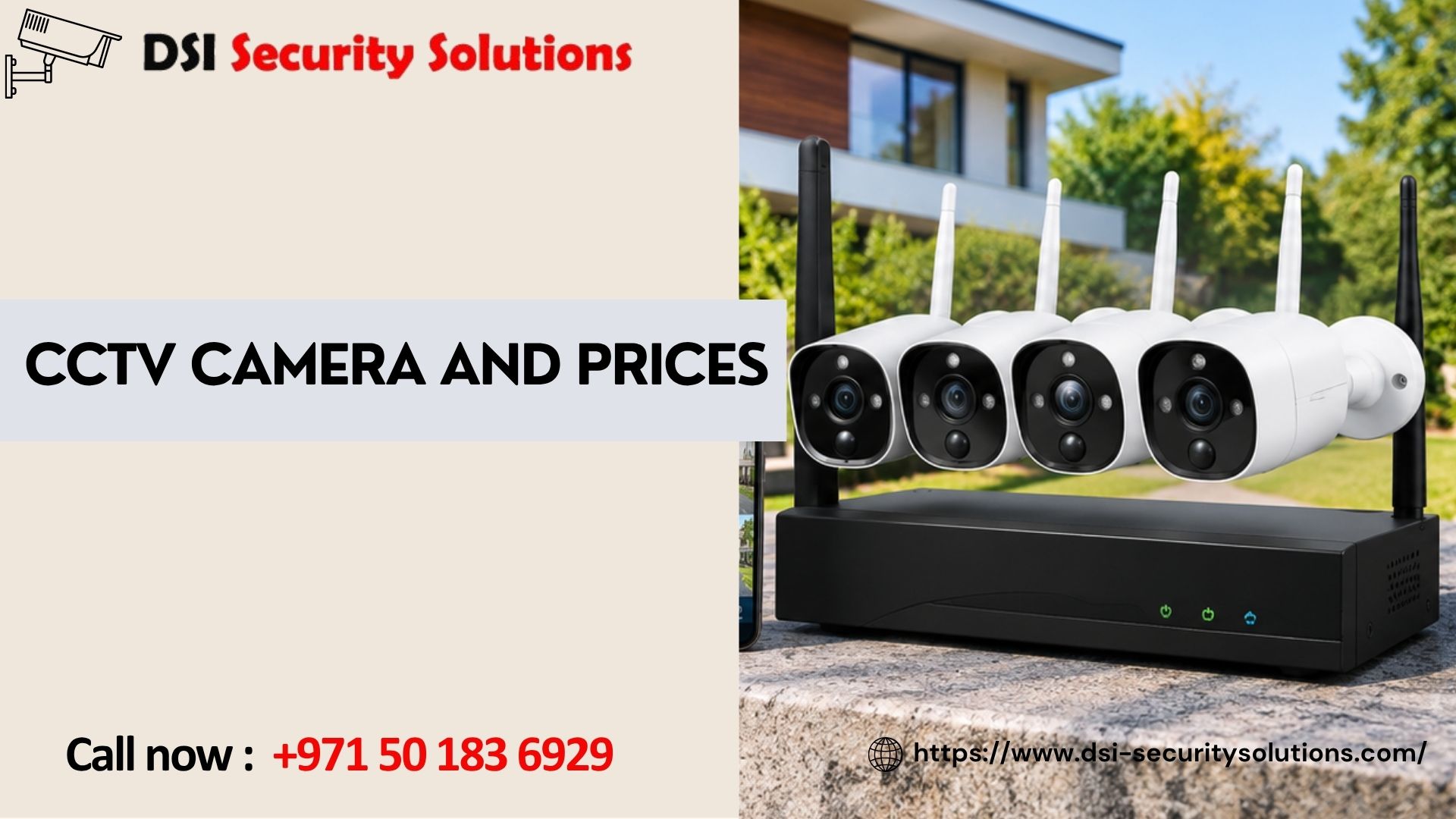
CCTV Camera and Prices: A Practical Guide to Choosing the Right Camera at the Right Cost
Shopping for security cameras can feel like comparing apples with oranges. One listing shows a camera at a very low price, another at ten times that, and both claim “HD,” “night vision,” and “smart detection.” Understanding CCTV camera and prices means knowing what each camera type does, what you are really paying for, and where it makes sense to spend more or save.
This guide walks through the main camera types, how each is typically priced relative to the others, the factors that move the final cost, and how to get a fair quote for your home or business.
Why CCTV Camera Prices Vary So Much
Two cameras can look almost identical and still perform very differently. Price differences usually come from:
- Sensor and lens quality: larger sensors and better lenses capture cleaner images in low light
- Resolution: higher megapixels cost more and need more storage
- Build quality: weatherproofing, vandal resistance, and heat tolerance add cost
- Smart features: AI detection, number plate recognition, and line crossing raise the price
- Brand and support: established brands usually offer warranty, firmware updates, and local service
- System type: analog, IP, wireless, and cloud setups are priced differently
A low price is not automatically a bad deal, and a high price does not always mean better value. The goal is to match the camera to the job.
CCTV Camera Types and Relative Pricing
Exact prices change with brand, model, and market conditions, so this guide compares types by relative cost instead of quoting fixed figures. For current pricing on your project, a site survey and itemized quote is the reliable route.
Dome Cameras
Relative cost: low to mid-range
Discreet and often vandal-resistant, dome cameras suit indoor areas, entrances, and ceilings. They are among the most common and affordable professional cameras.
Bullet Cameras
Relative cost: low to mid-range
Highly visible with good range and weatherproof housings, bullet cameras suit building exteriors, driveways, and perimeters.
Turret Cameras
Relative cost: mid-range
Turrets are easy to aim and avoid infrared glare from a dome cover, so night footage is often cleaner.
PTZ Cameras
Relative cost: high
Pan-tilt-zoom cameras cost more because of motors, optical zoom, and tracking features. One PTZ can cover a space that would need several fixed cameras.
360-Degree Panoramic Cameras
Relative cost: mid to high
They remove blind spots in open spaces such as showrooms and lobbies, and can replace multiple fixed cameras.
Wireless and Battery Cameras
Relative cost: low to mid-range, with extras
Lower installation cost thanks to less cabling, but you may need Wi-Fi upgrades, battery charging, or a cloud subscription.
AI and Smart Cameras
Relative cost: mid to high
Person and vehicle detection reduces false alerts and saves time searching footage, which can justify the higher price in busy or high-risk locations.
Analog vs. IP: How System Type Affects Price
| System | Equipment Cost | Image Quality | Best For |
|---|---|---|---|
| Analog HD (AHD, TVI, CVI) | Lower | Good | Small shops, budget upgrades, reusing coaxial cable |
| IP with PoE | Medium to higher | Excellent | Most new installations, expansion, smart features |
| Wireless | Low to medium | Good | Rentals, apartments, hard-to-wire areas |
| Hybrid | Medium | Good to excellent | Upgrading in stages |
| Cloud-based | Subscription-based | Excellent | Multi-site management, off-site storage |
IP cameras with PoE cost more upfront, but they usually give better image quality, easier expansion, and cleaner installation, which often makes them better value for new projects.
Resolution and Price: How Many Megapixels Do You Need?
Resolution is one of the biggest price drivers, but more is not always better.
- 2MP (Full HD): a sensible baseline for general monitoring
- 4MP: a strong mid-range choice that shows clearer faces and detail
- 8MP (4K): best where identification matters, such as entrances, gates, and tills
Higher resolution also needs more storage and network bandwidth, so it raises the cost of the recorder and hard drives too. A smart approach is to use higher resolution at critical points and standard resolution elsewhere.
What Else Affects the Final Price?
The camera is only one line on the quote. Other costs include:
Recorder and Storage
A DVR or NVR and its hard drives must handle your number of cameras, resolution, and retention period. Many properties keep 15 to 30 days of footage, though requirements vary. Cloud storage lowers hardware costs but adds subscription fees.
Cabling and Installation
Labor often forms a significant part of the total. Long cable runs, thick walls, multi-floor buildings, concealed wiring, and high mounting positions all increase installation time.
Network Equipment
IP systems may need PoE switches, routers, or Wi-Fi improvements to run smoothly.
Power Backup
A UPS keeps the system running during short power cuts and is worth considering for any property where continuous recording matters.
Maintenance and Support
Service contracts add a recurring cost but help catch failing drives, dirty lenses, and faults before they leave you unprotected.
What Is Usually Included in a CCTV Quote?
An itemized quote should show:
- Camera brand, model, and resolution
- Recorder type and storage capacity
- Switches, power supplies, and backup power
- Cabling, conduits, and mounting hardware
- Installation labor
- Configuration, mobile app setup, and training
- Warranty terms for equipment and workmanship
If anything is missing, ask whether it is included or billed separately. Vague quotes are a common source of surprise charges.
Hidden Costs to Watch For
- Cloud subscriptions for storage or advanced features
- Extra storage if the quoted hard drive is too small for your retention needs
- Additional cabling or access work on complex sites
- Network upgrades to support IP cameras
- Annual maintenance fees after the warranty period
- Compliance work for commercial premises where specific standards apply
Cheap vs. Mid-Range vs. Premium Cameras
Budget Cameras
These can suit small, low-risk spaces, but often have weaker night vision, shorter lifespans, limited firmware updates, and little warranty support. Poor footage may be too dark or blurry to identify anyone.
Mid-Range Cameras
For most homes and small businesses, this tier offers the best balance of image quality, durability, features, and price. Reputable brands in this range typically provide solid warranties and regular updates.
Premium Cameras
Premium models offer superior low-light performance, advanced analytics, stronger cybersecurity, and long-term support. They make sense for high-risk sites, large commercial projects, and critical infrastructure.
Consider total cost of ownership over several years: purchase price, installation, storage, maintenance, and replacement if equipment fails early. A well-installed mid-range system often costs less over time than a cheap one that needs replacing.
Pricing Considerations by Property Type
Apartments and small homes: Typically two to four cameras covering the entrance and key areas. Wireless or simple PoE systems keep costs manageable.
Villas: More cameras for the front, rear, driveway, garden, and perimeter, with longer cable runs.
Shops and retail stores: Coverage of entrances, tills, aisles, and stockrooms, with higher resolution where identification matters.
Offices: Reception, corridors, and parking, often with access control integration.
Warehouses and industrial sites: Long-range or PTZ cameras, strong night vision, and rugged housings suited to heat and dust.
Restaurants, hotels, and clinics: Discreet indoor coverage with attention to privacy and footage retention.
DIY vs. Professional Installation
A DIY kit can reduce upfront cost for a single camera or video doorbell. For multi-camera, outdoor, or commercial setups, professional installation often saves money by delivering:
- Correct placement without blind spots
- Neat, weatherproof cabling that lasts longer
- Secure network setup that reduces hacking risk
- Proper configuration that cuts false alerts
- Warranty and ongoing support
Fixing poor angles or bad cabling later often means paying twice.
How to Get the Best Value
- Define your goal: deterring theft, identifying faces, or monitoring remotely.
- Prioritize key areas: spend more at entrances and gates, less in low-risk spots.
- Match resolution to purpose: use 4K only where detail matters.
- Right-size storage: base it on real retention needs.
- Choose quality outdoors: heat and dust punish weak equipment.
- Plan for growth: choose IP or hybrid systems that can expand.
- Compare itemized quotes: match brand, resolution, storage, and warranty.
- Book a site survey: no one can price a project accurately without seeing the property.
CCTV Cameras and Pricing with DSI Security Solutions
At DSI Security Solutions, we keep pricing transparent. We start with a free site assessment, recommend cameras that fit your property and budget, and provide an itemized quotation so you can see exactly what you are paying for. Our team handles supply, installation, configuration, and training, and we provide maintenance and support after handover.
We recommend only what your property actually needs, whether that is a few cameras for a home or a full multi-camera system for a commercial site.
Frequently Asked Questions About CCTV Camera and Prices
How much does a CCTV camera cost?
It depends on the type, resolution, brand, and features. Basic fixed cameras cost the least, while PTZ, 4K, and AI-enabled models cost more. A site survey gives an accurate price for your project.
Why are some CCTV cameras so much cheaper than others?
Cheaper cameras often use smaller sensors, simpler lenses, and weaker housings, and may lack firmware updates and warranty support. More expensive cameras generally offer better low-light performance, durability, and security.
Is installation included in the camera price?
Not always. Many listings show equipment only. Ask whether the quote includes cabling, labor, configuration, and training.
Does higher resolution always mean a better camera?
Not necessarily. Sensor quality, lens, and low-light performance matter too. Higher resolution also needs more storage, so use it where identification detail matters.
Are wireless cameras cheaper than wired cameras?
Wireless cameras often cost less to install, but may need Wi-Fi upgrades, battery charging, or subscriptions. Wired systems are generally more reliable for large or critical sites.
Are there monthly fees for CCTV cameras?
Systems with local recording usually have none. Cloud storage and some smart features require subscriptions, so check before buying.
How many cameras do I need?
Many homes need two to four cameras covering main entrances, while larger villas and commercial sites need more. A site survey gives the most accurate recommendation.
What is the difference between analog and IP camera prices?
Analog HD systems usually cost less upfront and can reuse existing cable. IP systems cost more but offer better image quality, smarter features, and easier expansion.
Is a cheap CCTV camera worth buying?
It may suit a small, low-risk need, but cheap cameras often have weak night vision and shorter lifespans. A mid-range camera usually offers better value over time.
Can I add cameras to my existing system later?
Often yes, if the recorder has spare channels and storage. IP and hybrid systems are generally easier to expand.
Do CCTV systems need maintenance?
Yes. Lens cleaning, connection checks, firmware updates, and hard drive checks help ensure the system records when you need it.
How can I get an accurate CCTV quote?
Book a site survey, ask for an itemized quotation, and compare brand, resolution, storage, and warranty terms across providers.
Understanding CCTV camera and prices is about more than finding the lowest number. The right choice balances camera type, resolution, build quality, storage, installation, and long-term support. Spend where it matters, such as entrances, gates, and outdoor cameras, save where it doesn’t, and insist on an itemized quote so you know exactly what you are paying for.