
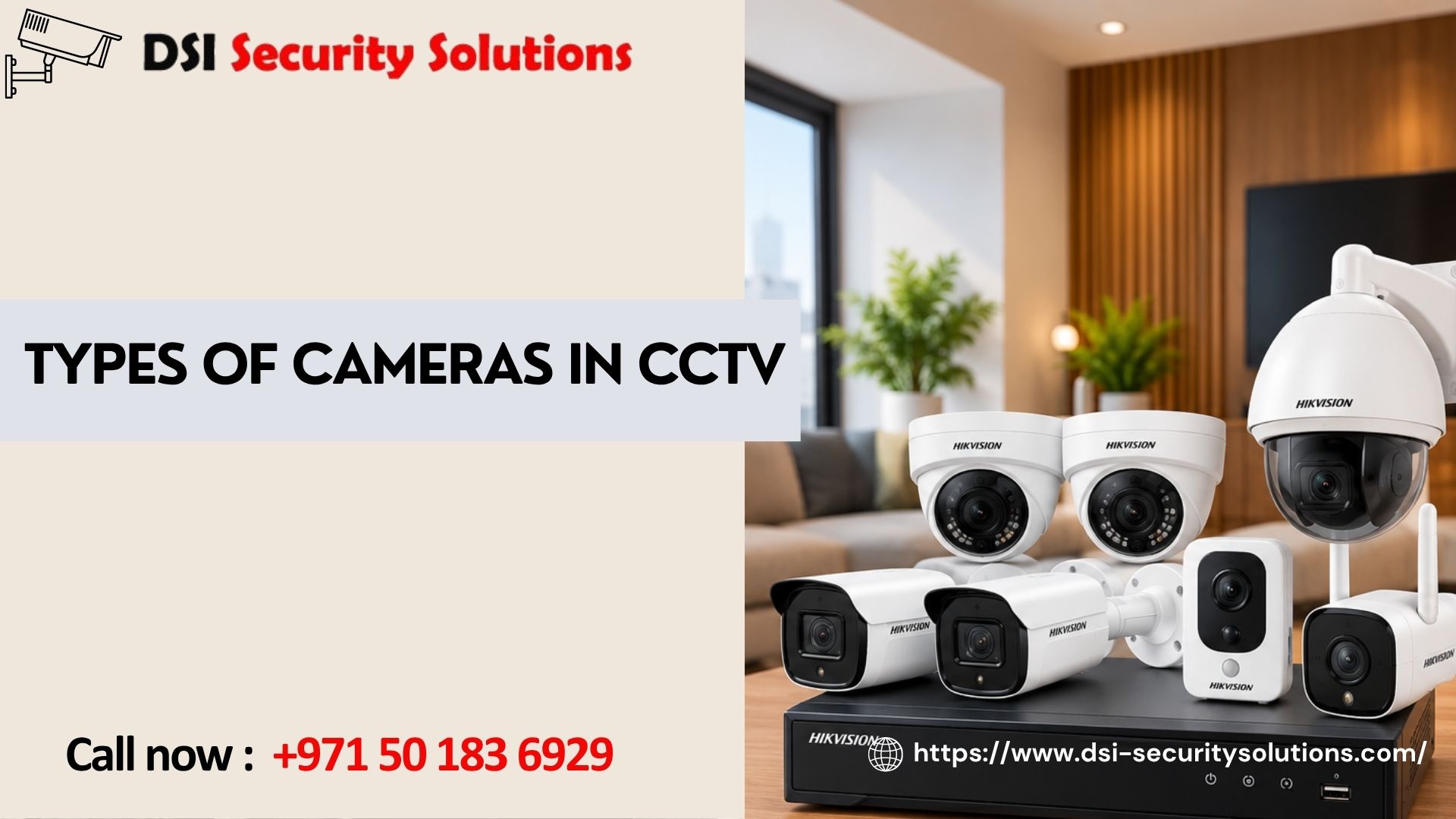
Types of Cameras in CCTV: A Complete Guide to Choosing the Right Camera
Walk into any security supplier and you will see rows of cameras that look similar at first glance but behave very differently once mounted. A camera that works perfectly over a shop counter can be useless in a car park, and one built for a warehouse yard may be overkill in a reception area. Understanding the types of cameras in CCTV is the first step toward a system that captures what you actually need.
This guide explains the main camera styles, how they differ by technology, which features matter, and where each type works best, so you can match the right camera to the right location.
How CCTV Cameras Are Classified
Cameras are usually described in three ways, and a single camera combines all three:
- By shape and housing: dome, bullet, turret, PTZ, panoramic, box, and others
- By technology: analog HD or IP (network)
- By function or feature: night vision, thermal, wireless, AI-enabled, and so on
For example, a “4MP IP bullet camera with color night vision” describes its shape (bullet), technology (IP), resolution, and a feature (night vision). Keeping these three layers in mind makes spec sheets much easier to read.
Types of CCTV Cameras by Shape and Design
1. Dome Cameras
Dome cameras sit inside a half-sphere housing. They are discreet, and because people cannot easily tell where the lens points, they work well as a deterrent. Many are vandal-resistant, which makes them a solid choice for ceilings and entrances.
Best for: shops, offices, lobbies, corridors, and elevators.
2. Bullet Cameras
Bullet cameras are long and cylindrical. Their visibility is a feature: they tell visitors the property is monitored. They generally offer good range and weatherproof housings.
Best for: building exteriors, driveways, gates, and perimeters.
3. Turret (Eyeball) Cameras
Turret cameras are similar to domes but use a ball-and-socket mount that is easy to aim. Because the lens is not behind a dome cover, they avoid infrared glare, which often gives cleaner night footage.
Best for: homes, small businesses, entrances, and covered outdoor areas.
4. PTZ (Pan-Tilt-Zoom) Cameras
PTZ cameras rotate, tilt, and zoom, either manually or automatically. A single unit can cover an area that would otherwise need several fixed cameras, and many models track moving people or vehicles.
Best for: car parks, warehouses, industrial yards, campuses, and sites with a control room.
5. 360-Degree Panoramic Cameras
Panoramic or fisheye cameras use a wide-angle lens to capture a full circle. Software then converts the image into a normal view. They remove blind spots in open spaces.
Best for: showrooms, restaurants, reception areas, and open-plan offices.
6. Box Cameras
Box cameras are the traditional rectangular design with a separate, interchangeable lens. They allow precise lens choice for specific distances and angles, though they are less common in basic installations today.
Best for: specialized applications such as long-range viewing or custom lens requirements.
7. C-Mount and Specialty Cameras
These support specialist lenses for very long distances or unusual conditions, and are typically used in industrial or high-security environments.
8. Covert and Hidden Cameras
Compact cameras designed to blend into their surroundings. Because they raise privacy and legal questions, they should only be used where permitted, and never in private spaces such as bathrooms or changing areas. Always confirm local rules first.
Types of CCTV Cameras by Technology
Analog HD Cameras (AHD, HD-TVI, HD-CVI)
These send video over coaxial cable to a DVR. Modern HD analog formats deliver sharp 1080p to 4K images at lower cost, and they can reuse existing cabling.
Best for: small shops and budget upgrades of older systems.
IP (Network) Cameras
IP cameras send digital video over a network to an NVR or cloud server. They offer higher resolution, advanced analytics, and easy expansion. With Power over Ethernet (PoE), a single cable carries both power and data.
Best for: most new installations, from homes to large commercial sites.
Wireless Cameras
Wireless cameras send video over Wi-Fi. Most still need power from a plug, battery, or solar panel. They install quickly but depend on signal strength.
Best for: rentals, apartments, and areas where running cable is impractical.
Hybrid Systems
A hybrid system supports both analog and IP cameras on one recorder, which allows upgrades in stages.
Types of CCTV Cameras by Function
Night Vision and Infrared Cameras
Built-in infrared LEDs capture black-and-white footage in total darkness. Full-color night vision models use ambient light or a small built-in light to keep color in the image, which helps identify clothing and vehicles.
Thermal Cameras
Thermal cameras detect heat rather than light, so they work in complete darkness, smoke, and fog. They are used for perimeter detection at high-security and industrial sites.
Wide Dynamic Range (WDR) Cameras
WDR balances very bright and very dark areas in the same frame, which is useful near windows, gates, and sun-facing entrances.
AI-Enabled Cameras
Smart cameras distinguish people and vehicles from shadows, animals, and passing headlights, reducing false alarms. Features can include line-crossing alerts, number plate recognition, facial recognition, and people counting.
License Plate Recognition (LPR/ANPR) Cameras
Optimized to capture number plates clearly, even at speed, these suit gates, car parks, and vehicle entrances.
Vandal-Resistant Cameras
Reinforced housings, often rated IK10, protect against impact and tampering in exposed locations.
Weatherproof Outdoor Cameras
Outdoor cameras should carry an IP66 or IP67 rating for dust and water resistance, and a temperature range suited to hot, dusty climates.
Quick Comparison of CCTV Camera Types
| Camera Type | Key Strength | Best Location |
|---|---|---|
| Dome | Discreet, vandal-resistant | Indoors, entrances |
| Bullet | Visible deterrent, long range | Exteriors, perimeters |
| Turret | Easy to aim, clean night images | Homes, small businesses |
| PTZ | Wide coverage, tracking | Car parks, yards |
| 360° panoramic | No blind spots | Showrooms, lobbies |
| Thermal | Detects heat in total darkness | High-security perimeters |
| LPR/ANPR | Clear plate capture | Gates, vehicle entrances |
| Wireless | Fast, flexible installation | Rentals, hard-to-wire areas |
How to Choose the Right Type of Camera
1. Define the Purpose
Do you want to deter theft, identify faces, read number plates, or simply keep an eye on a space? Identification needs higher resolution and careful placement.
2. Consider the Location
Indoor areas suit domes and turrets. Outdoor perimeters suit bullets and weatherproof turrets. Large open areas suit PTZ or panoramic cameras.
3. Check the Lighting
Dark areas need strong infrared or full-color night vision. Bright, high-contrast scenes benefit from WDR.
4. Pick the Right Resolution
2MP is a sensible baseline, 4MP shows clearer detail, and 8MP (4K) suits entrances and gates where identification matters. Higher resolution also needs more storage and bandwidth.
5. Think About Coverage
Fixed cameras give consistent views of specific points. PTZ and panoramic cameras cover more area but need to be positioned thoughtfully.
6. Plan for the Environment
In hot, dusty climates, check the IP rating and operating temperature range, not just the marketing description.
7. Allow for Growth
IP and hybrid systems are easier to expand later than basic analog setups.
Matching Camera Types to Property Types
Homes and villas: Turret or bullet cameras at entrances, driveways, and gardens, with night vision and mobile alerts.
Shops and retail stores: Domes over tills and aisles, turrets at entrances, and panoramic cameras for open floors.
Offices: Domes in reception and corridors, bullets or turrets for car parks and entry points.
Warehouses and industrial sites: Bullets and PTZ cameras for yards and perimeters, with strong night vision and rugged housings.
Hotels, schools, and clinics: Discreet domes indoors, with careful attention to privacy and footage retention.
Why Installation Matters as Much as Camera Type
The best camera still produces poor footage if it is placed badly. Cameras mounted too high capture the tops of heads, those facing the sun wash out, and those with weak Wi-Fi or poor cabling drop out. Professional installers survey the property, choose the right types for each location, run neat cabling, and configure the system securely. A well-placed mid-range camera often beats an expensive one installed poorly.
Choosing Camera Types with DSI Security Solutions
At DSI Security Solutions, we help homes and businesses choose the right mix of cameras for their property. We begin with a free site assessment, recommend suitable camera types for each area, and handle installation, secure configuration, and training. After handover, we provide maintenance and support so your system keeps performing.
We explain the options plainly, provide itemized quotations, and recommend only what your property needs.
Frequently Asked Questions About Types of Cameras in CCTV
What are the main types of cameras in CCTV?
The most common are dome, bullet, turret, PTZ, and 360-degree panoramic cameras. They can also be grouped by technology (analog HD, IP, wireless) and by function (night vision, thermal, AI-enabled, license plate recognition).
Which CCTV camera type is best for home use?
Turret and bullet cameras are popular for homes because they are easy to aim and handle outdoor conditions well. Domes work well indoors.
What is the difference between dome and bullet cameras?
Dome cameras are discreet, vandal-resistant, and suit indoor areas. Bullet cameras are more visible, offer longer range, and suit outdoor use.
What is a PTZ camera used for?
PTZ cameras pan, tilt, and zoom to cover large areas and follow moving subjects. They are used in car parks, yards, warehouses, and campuses.
What is a turret camera?
A turret camera, also called an eyeball camera, has a ball-and-socket mount and no dome cover. It is easy to aim and usually produces cleaner night images.
Which camera type is best for night vision?
Cameras with infrared LEDs or full-color night vision perform best. Turret cameras often give cleaner night footage because there is no dome cover to cause infrared reflections.
What is the difference between analog and IP cameras?
Analog cameras send video over coaxial cable to a DVR. IP cameras send digital video over a network to an NVR. IP generally offers higher resolution and smarter features.
Are wireless CCTV cameras reliable?
They can be with strong Wi-Fi and good placement. For critical or large sites, wired cameras are generally more dependable.
What camera is best for reading number plates?
A dedicated license plate recognition camera, or a high-resolution camera positioned and configured for plate capture, works best at gates and vehicle entrances.
What is a thermal camera?
A thermal camera detects heat rather than light, so it works in total darkness, smoke, and fog. It is mainly used for high-security perimeter detection.
How many cameras do I need?
It depends on the size and layout of the property. Many homes need two to four cameras covering main entrances, while commercial sites may need many more. A site survey gives the most accurate answer.
Can I mix different types of cameras in one system?
Yes. Most properties use a mix, such as bullets outdoors, domes indoors, and a PTZ for open areas, as long as they are compatible with the recorder.
There is no single best camera for every situation. Domes suit discreet indoor coverage, bullets provide visible outdoor deterrence, turrets balance ease of installation with clean night footage, PTZ and panoramic cameras cover large areas, and specialist cameras handle unusual demands. Choose by location, lighting, and purpose, and have the system installed properly so each camera does its job.
Not sure which cameras you need? Contact DSI Security Solutions today to book a free site survey and get tailored recommendations for your property.