
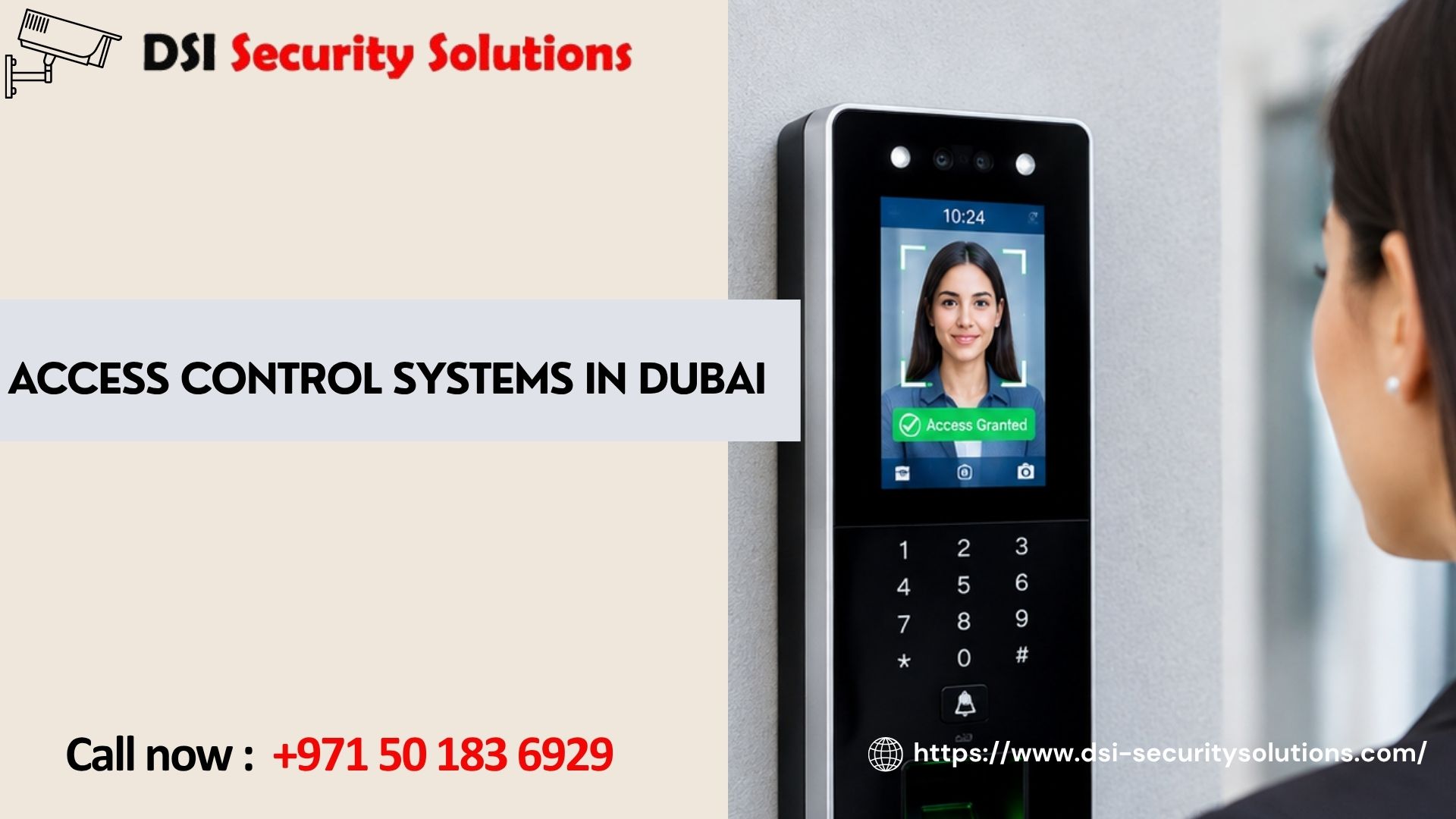
Access Control Systems in Dubai: Secure, Smart Entry for Homes and Businesses
Every building in Dubai has to answer one question: who is allowed in, where, and when? A metal key can’t answer it. Keys get copied, lost, and passed around, and they leave no record of who used them.
Modern access control systems in Dubai solve this. They verify each person, open only the doors that person is permitted to use, and log every entry. Whether you manage a corporate tower, a warehouse in Al Quoz, a retail outlet, or a private villa, the right system protects your people, property, and information.
DSI Security Solutions has supplied and installed security and IT systems across the UAE since 1995. This guide explains how access control works, which technologies are available, how to choose the right one, and what to expect from installation.
What Is an Access Control System?
An access control system regulates and monitors entry to a physical space. It checks a person’s credentials against a database of permissions. If they match, the door unlocks. If not, it stays shut and the attempt is recorded.
A typical system includes:
- Credentials: fingerprints, face data, RFID cards, key fobs, PIN codes, or mobile credentials.
- Readers: the devices at each door that capture and check the credential.
- Controllers: the units that decide whether to grant access.
- Door hardware: magnetic locks, electric strikes, turnstiles, barriers, or gates.
- Management software: where administrators add users, set schedules, and review activity logs.
Advanced systems also connect to CCTV, alarms, intercoms, and attendance software, so security works as one connected platform.
Why Dubai Properties Need Modern Access Control
Dubai’s high-rise towers, gated communities, free zones, and logistics hubs bring particular security needs.
- High footfall. Offices and residential towers see employees, tenants, contractors, couriers, and visitors daily. Access control separates them clearly.
- Valuable assets. Server rooms, stock rooms, cash offices, and archives all need restricted entry.
- Audit trails. An entry log with names, doors, and timestamps replaces guesswork with facts when an incident occurs.
- Efficiency. Staff badge in without waiting for a guard, and managers can grant or remove access remotely in seconds.
- Compliance. Depending on your property and activity, Dubai authorities such as the Security Industry Regulatory Agency (SIRA) may set requirements for security systems. Confirm what applies to your site before you install.
Types of Access Control Systems Available in Dubai
The right technology depends on your risk level, budget, and number of users.
Biometric access control (fingerprint and face recognition)
Biometric readers identify people by who they are, not what they carry. They suit server rooms, executive floors, and sensitive storage because credentials can’t be lent or forgotten. Linked to attendance tracking, they also prevent “buddy punching.” Learn more about our biometric access control options.
RFID and keycard access control
Proximity cards and key fobs are the workhorse of commercial security. They are fast, inexpensive to issue, and easy to cancel if lost, which suits offices, hotels, schools, and residential buildings with many users.
PIN code and keypad systems
A keypad is a low-cost choice for stores and utility rooms. For stronger security, combine a PIN with a card or fingerprint (multi-factor authentication).
Mobile and cloud-based access
Smartphone credentials and cloud management let administrators control several sites from one dashboard, which helps multi-branch companies and property managers.
Video intercom and gate access
For villas, compounds, and building entrances, a video intercom system lets you see and speak to visitors and open the door remotely. Paired with barriers or turnstiles, it controls both vehicle and pedestrian entry.
Key Benefits of an Access Control System
- Stronger security. Only authorised people reach restricted areas, and every attempt is recorded.
- No rekeying costs. When someone leaves, you delete their credential instead of changing locks.
- Real-time visibility. See who entered, which door they used, and when.
- Flexible permissions. Give cleaners access from 6 pm to 9 pm, a contractor access for three days, or a department access to its own floor only.
- Integration. Link door events to CCTV footage, connect to time and attendance machines for payroll, and tie in fire alarm panels so doors release safely in an emergency.
- Scalability. Start with one door and expand to a full building or multiple locations.
How to Choose the Right Access Control System in Dubai
Start with your needs, not the product catalogue.
- How many doors and users do you have? A single-door office and a 40-floor tower need very different controller capacity and software.
- What are you protecting? General doors need convenience. Server rooms, pharmacies, and valuable stock need biometrics or dual-factor entry.
- Indoor or outdoor? Dubai’s heat, dust, and humidity are hard on equipment, so outdoor readers and gate hardware should be rated for harsh conditions.
- Do you need integration? If you already use CCTV, alarms, or attendance software, choose a system that connects to them.
- Who will manage it? Some businesses want a simple local system. Others need cloud access, multi-site control, and detailed reports.
- Is fire safety covered? Doors on escape routes must unlock safely in a fire. A professional installer designs this in from the start.
- What support is offered? Ask about maintenance plans, response times, spare parts, and staff training.
Our Access Control Installation Process
At DSI Security Solutions, a typical project follows six steps:
- Site survey and consultation: we review your layout, security goals, users, and budget.
- System design: we recommend readers, locks, controllers, and software, and prepare a clear proposal.
- Professional installation: our engineers install and cable the system neatly, with minimal disruption.
- Configuration and testing: we set up users, schedules, and permissions, then test every door, including fail-safe behaviour.
- Training and handover: we show your team how to add users and run reports.
- Ongoing support: regular checks and fast technical help keep everything reliable.
Because we also work with CCTV, structured cabling, network integration, and telecom solutions, we can deliver the whole project, not just the door hardware.
Where Access Control s Used
- Offices and corporate buildings: staff entry, visitor management, and floor-level restrictions.
- Villas and residential communities: gate entry, family access, and visitor screening.
- Apartment towers: resident cards, lift control, and parking barriers.
- Warehouses and logistics hubs: dock doors, stock rooms, and shift-based access. See our guide to CCTV in warehouses for a complementary layer of protection.
- Retail, schools, clinics, and hotels: staff-only areas, restricted zones, and guest room access.
Access Control and CCTV: A Stronger Combination
Access control tells you who opened a door. CCTV shows you what happened. Integrated, every door event can be matched to a video clip. If a door is forced or held open, the system can alert your team and pull up the nearest camera instantly. Adding motion sensors and alarms creates a layered defence that deters intruders and speeds up investigations.
Why Choose DSI Security Solutions?
With roots going back to 1995, DSI supports businesses and property owners across the UAE. You get:
- Access control, CCTV, fire alarm, motion sensor, video intercom, and time attendance from one provider.
- Systems tailored to your property, not one-size-fits-all packages.
- Network integration and structured cabling expertise for clean, reliable installations.
- Professional installation, testing, training, and ongoing support.
Frequently Asked Questions About Access Control Systems in Dubai
What is an access control system, and how does it work?
It verifies a person’s credential, such as a fingerprint, card, or PIN, and unlocks the door only if that person is authorised. It also logs every entry attempt.
Which type of access control is best for a Dubai office?
Most offices use RFID cards or fingerprint readers for everyday doors, with biometric or dual-factor entry for sensitive rooms. The best choice depends on user numbers, budget, and security level.
Are biometric access control systems secure?
Yes. Fingerprint and facial recognition rely on a person’s own features, so they are hard to share or duplicate, which is why they are widely used where higher security is needed.
Can access control integrate with CCTV and fire alarms?
Yes. Integration links door events to video, triggers alerts, and releases doors during a fire alarm, giving you one connected security setup.
Can I manage the system remotely?
Many modern systems offer web or mobile management so administrators can add users, unlock doors, and view logs from anywhere. Confirm remote features with your installer during design.
How long does installation take?
A single-door job can be quick, while multi-floor or multi-site projects take longer. A site survey gives you an accurate schedule.
Do I need approval for security systems in Dubai?
Requirements vary by property type and business activity. Some sites must follow Dubai authority rules such as SIRA’s, and fire safety standards also apply. A qualified installer can guide you.
How much does an access control system cost?
Cost depends on the number of doors, technology, locks, software, and cabling. The most reliable way to get an accurate price is a site survey and written quote.
Does it need maintenance?
Yes. Regular inspection of readers, locks, power supplies, and software prevents downtime and extends equipment life.