
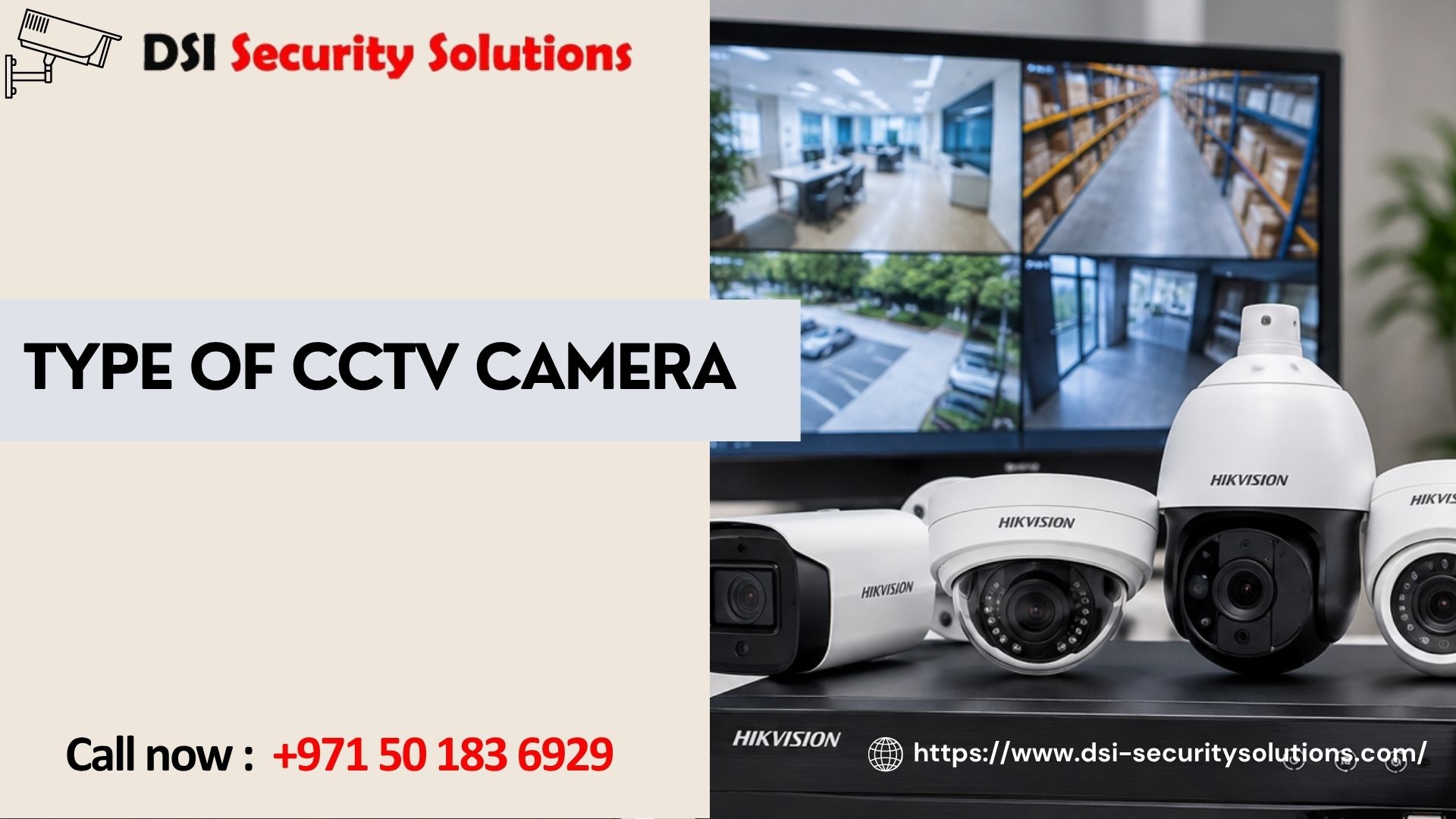
Type of CCTV Camera: A Complete Guide to Choosing the Right Security Camera
Choosing the right type of CCTV camera is one of the most important decisions when protecting your home, shop, office or warehouse. The wrong camera can leave blind spots, produce unusable footage at night, or fail within a year when exposed to weather. The right one gives you clear evidence, real-time awareness and genuine peace of mind.
Today’s market offers dozens of options: dome, bullet, PTZ, IP, analog, wireless, thermal and more. This guide explains every major type of CCTV camera in plain language, shows where each works best, and helps you match the camera to your property, budget and security goals.
What Is a CCTV Camera?
CCTV stands for closed-circuit television. Unlike broadcast TV, the video signal goes only to a limited set of monitors or recorders, such as a DVR, an NVR or a secure cloud account. A modern surveillance camera system includes cameras, cabling or wireless connectivity, a recorder, storage and a viewing platform such as a monitor or mobile app.
Understanding the basic types of security cameras helps you cover the right areas without overspending.
The Main Types of CCTV Camera
1. Dome Cameras
Dome cameras sit inside a rounded, transparent shell, usually mounted on a ceiling or wall. Because people cannot easily tell where the lens is pointing, they work as a strong deterrent.
Best for: retail stores, offices, hotels, restaurants, lobbies and corridors.
Advantages: discreet, low-profile design; vandal-resistant models available; wide viewing angles for indoor coverage.
Limitations: fixed-lens models offer limited zoom, and the dome can collect dust or reflections.
2. Bullet Cameras
Bullet cameras are long, cylindrical and easy to recognise. They are built for outdoor use and typically see farther than domes. Their visible presence is an obvious deterrent.
Best for: building perimeters, car parks, driveways, gates and warehouses.
Advantages: strong weather resistance (look for an IP66 or IP67 rating), long-range focus, powerful infrared night vision and simple installation.
Limitations: more noticeable, so they can be targeted by vandals if mounted too low.
3. PTZ (Pan-Tilt-Zoom) Cameras
A PTZ camera rotates horizontally, tilts vertically and zooms optically, either manually or automatically. One PTZ camera can cover an area that would otherwise need several fixed cameras.
Best for: large open sites, industrial yards, parking facilities, campuses and live monitoring.
Advantages: wide coverage, powerful optical zoom, auto-tracking of moving subjects and programmable patrol routes.
Limitations: higher cost, and it can only look one way at a time, so it may miss events outside its current view.
4. Turret (Eyeball) Cameras
Turret cameras combine features of domes and bullets in a compact ball-style body. With no dome covering the lens, there is no glare from infrared light bouncing back, which often improves night footage.
Best for: small shops, entrances, porches and covered outdoor areas.
Types of CCTV Camera by Technology
Beyond shape, cameras differ by how they capture and transmit video. This is where image quality, scalability and cost are largely decided.
Analog (HD-over-Coax) Cameras
Analog systems send video through coaxial cable to a DVR. Modern HD formats such as AHD, TVI and CVI deliver sharp 1080p to 4K images over existing cabling, making them a cost-effective choice for upgrades.
IP (Network) Cameras
IP cameras send digital video over a network to an NVR or the cloud. They support higher resolutions (up to 4K and beyond), advanced analytics and Power over Ethernet (PoE), which carries power and data through a single cable. Smart features such as motion detection zones, line-crossing alerts and licence plate recognition are available on supported models. IP cameras suit businesses that want a future-ready, scalable system.
Wireless (Wi-Fi) Cameras
Wireless security cameras connect through Wi-Fi rather than a data cable, although most still need a power source. Battery and solar versions exist too. Setup is quick and placement is flexible, but signal strength and interference can affect reliability, so they suit homes and small areas better than large commercial sites.
Specialized CCTV Camera Types
- Night vision (infrared) cameras: infrared LEDs record clear black-and-white footage in total darkness. Many newer models offer colour night vision using low-light sensors or supplementary white light.
- Thermal cameras: detect heat signatures instead of visible light, so they work in darkness, fog, smoke and glare. They are valued for critical infrastructure and perimeter protection.
- ANPR / LPR cameras: read vehicle licence plates for access control, parking management and traffic monitoring.
Quick Comparison of Popular Security Camera Types
| Camera Type | Best Use | Key Strength | Main Limitation |
|---|---|---|---|
| Dome | Indoor, retail, offices | Discreet, vandal-resistant | Limited zoom |
| Bullet | Outdoor perimeters | Long range, weatherproof | Highly visible |
| PTZ | Large open areas | Pan, tilt and zoom | Higher cost |
| Turret | Entrances, small shops | Reduced night glare | Moderate range |
| IP | Scalable business systems | High resolution, smart features | Needs network planning |
| Analog HD | Budget upgrades | Uses existing cabling | Fewer smart features |
| Wireless | Homes, small spaces | Easy installation | Signal dependent |
| Thermal | High-security sites | Sees in total darkness | Premium pricing |
How to Choose the Right Type of CCTV Camera
The best camera is the one that fits your actual risks. Work through these questions before you buy.
- Where will it be installed? Indoor spaces suit domes and turrets. Outdoor areas need weatherproof bullets or PTZ units with a proper IP rating.
- What do you need to see? General monitoring needs less detail than identifying faces or reading number plates. For identification, choose 4MP to 8MP and the right lens.
- What is the lighting like? Low-light areas call for infrared, colour night vision or thermal technology. Wide dynamic range (WDR) helps with bright backlight, such as doorways.
- How will you view and store footage? Choose between local storage on a DVR or NVR, cloud storage, or both, and decide how many days of recording you need.
- What is your total budget? Include cabling, installation, storage and maintenance, not just the camera price.
- Will you expand later? If so, an IP-based system makes adding cameras easier.
Professional CCTV Installation with DSI Security Solutions
Knowing the types of CCTV camera is the first step. Designing a system that works reliably day and night is the next. At DSI Security Solutions, our team helps homeowners and businesses select, install and maintain surveillance systems tailored to their property. We assess your layout, identify high-risk areas, recommend the right combination of camera types and configure recording and remote access so you can monitor with confidence.
Contact DSI Security Solutions today to request a consultation and quotation.
Frequently Asked Questions About CCTV Camera Types
What are the main types of CCTV camera?
The most common types are dome, bullet, PTZ and turret cameras. By technology, they are classed as analog (HD), IP, wireless and PoE cameras. Specialised options include thermal, ANPR, 360-degree and solar-powered cameras.
Which type of CCTV camera is best for home use?
Wireless or PoE turret and dome cameras suit most homes, while bullet cameras work well for driveways and exterior walls. Choose at least 2MP to 4MP with night vision and remote viewing.
Which CCTV camera is best for outdoor use?
Bullet cameras and weatherproof turret or PTZ cameras are the best outdoor choices. Look for an IP66 or higher rating, strong infrared night vision and vandal resistance.
What is the difference between analog and IP CCTV cameras?
Analog cameras send video over coaxial cable to a DVR, while IP cameras send digital video over a network to an NVR or the cloud. IP generally offers higher resolution, better analytics and easier scaling, whereas HD analog is often cheaper for upgrades.
Are wireless CCTV cameras reliable?
They can be, with a strong Wi-Fi signal and good placement, and they are convenient for homes and small spaces. For large or critical sites, wired PoE systems are generally more stable.
Can CCTV cameras work without internet?
Yes. Wired systems recording to a local DVR or NVR work without internet. You only need a connection for remote viewing.
How long can a CCTV system store footage?
It depends on the number of cameras, resolution, compression and hard drive size. A properly sized system can store anywhere from a few days to several months of footage.
There is no single best type of CCTV camera for every situation. Domes excel indoors, bullets suit outdoor perimeters, PTZ cameras cover wide spaces, and IP systems offer the most room to grow. The smartest approach is to combine the right camera types for your property, lighting, budget and security goals, and to have the system professionally designed and installed.
Ready to protect your property? Get in touch with DSI Security Solutions for expert advice, a site assessment and a CCTV system built around your needs.