
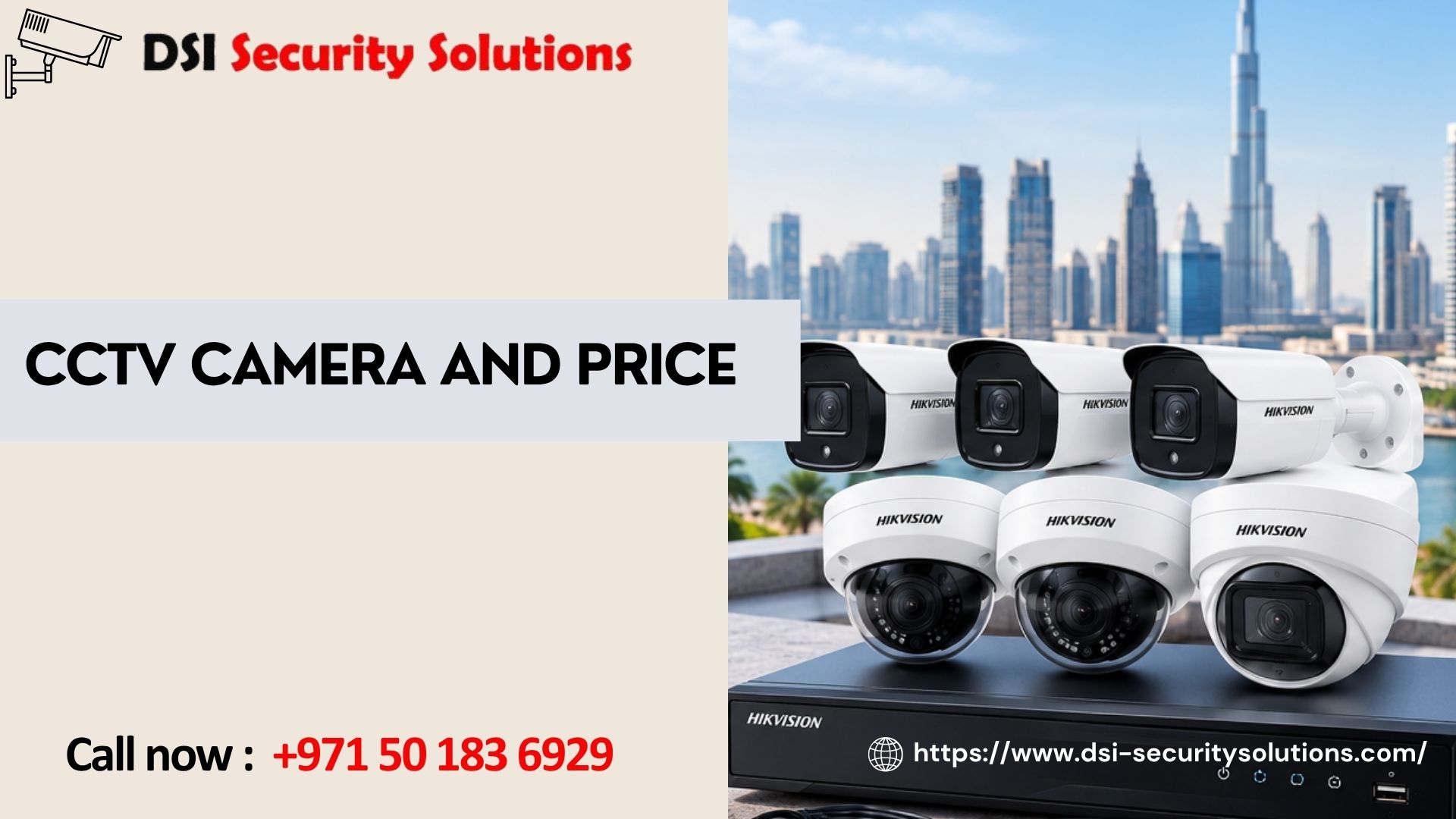
CCTV Camera and Price: What You Should Expect to Pay for Reliable Security
If you are searching for a CCTV camera and price information, you probably want a straight answer: how much will it cost to protect my home or business? The honest answer is that it depends on the type of camera, the number of cameras, the recording system, and the installation. The good news is that once you understand what drives the cost, you can build a system that fits your budget without paying for features you do not need.
This guide breaks down CCTV camera prices, explains what affects the total cost, and shows you how to compare quotes fairly. At DSI Security Solutions, we help homeowners and businesses choose systems that match their risks and budget, so you will also find practical tips you can use before you buy.
How Much Does a CCTV Camera Cost?
CCTV pricing has two parts: the equipment and the installation. A single camera can cost very little, but a complete security system includes cameras, a recorder, storage, cabling or network equipment, a power supply, and professional setup.
As a rough guide, the figures below are typical market ranges. Actual prices change with brand, specification, and supply, so treat them as a starting point and request a written quote for your property.
| Item | Typical price range (approx.) |
|---|---|
| Basic indoor HD camera | Low |
| Standard outdoor HD or 2MP camera | Low to mid |
| 4MP to 8MP (4K) camera | Mid to high |
| PTZ (pan-tilt-zoom) camera | High |
| Digital video recorder (DVR) or network video recorder (NVR) | Mid |
| Hard drive storage | Low to mid |
| Professional installation | Varies by property and cabling |
A small home with two to four cameras usually costs far less than a warehouse or multi-storey office with dozens of cameras, so the number and placement of cameras is the biggest factor in your final price.
Factors That Affect CCTV Camera Price
Camera type and resolution
Higher resolution means clearer footage. A 2MP camera is fine for general monitoring, while 4MP or 4K cameras capture faces and number plates in greater detail. More pixels cost more, and they also need more storage.
Number of cameras
Each extra camera adds equipment and installation time. A site survey helps you cover key areas without paying for overlapping views.
Wired or wireless
Wired cameras (analogue HD or IP over PoE) are stable and well suited to permanent installations. Wireless cameras reduce cabling work but still need power, and large properties may need extra Wi-Fi equipment.
Recorder and storage
A DVR works with analogue HD cameras, while an NVR works with IP cameras. The number of channels and the size of the hard drive affect the price. Longer retention, such as 30 days of continuous footage, requires more storage.
Special features
Night vision, colour night vision, audio, smart motion detection, person and vehicle alerts, and weatherproof or vandal-resistant housings all raise the cost slightly but improve performance.
Installation complexity
Running cables through walls, ceilings, or across long distances increases labour. Simple installs on a single floor cost less than complex sites with hidden wiring.
Brand and warranty
Established brands with reliable warranties usually cost more than no-name products, but they tend to offer better image quality, support, and software updates.
Types of CCTV Cameras and Where They Fit
Dome cameras are discreet and tamper-resistant, a common choice for shops, offices, and indoor areas.
Bullet cameras are visible, long-range cameras that work well outdoors and act as a clear deterrent.
PTZ cameras pan, tilt, and zoom to follow movement, which suits car parks, warehouses, and large open areas.
Turret cameras offer wide coverage with less glare at night, making them popular in entrances and lobbies.
IP cameras send digital video over a network and support high resolution and remote access.
Analogue HD cameras deliver good quality at a lower cost and are an economical choice for budget-conscious projects.
Wireless and battery cameras are quick to install and ideal for rented spaces or temporary needs.
Home CCTV vs. Business CCTV Pricing
A home system usually needs a few cameras covering the front door, back door, driveway, and garden, plus a small recorder. This keeps the price manageable.
A business system often needs more cameras, higher resolution, longer storage, remote monitoring for multiple sites, and sometimes integration with alarms or access control. These requirements raise the cost but protect staff, stock, and equipment. Retail shops, warehouses, offices, and construction sites each have different needs, so a tailored design avoids overspending.
Hidden Costs to Watch For
When comparing a CCTV camera and price quote, ask what is included. Common extras include:
- Cabling, conduit, and mounting accessories
- Extra storage for longer retention
- Power supplies, switches, or network equipment
- Cloud storage or app subscription fees
- Maintenance and annual service visits
- Training on how to use the system
A low headline price can become expensive if these items are missing from the quote.
How to Get the Best Value
- Define your goal. Decide whether you want deterrence, evidence, remote monitoring, or all three.
- Cover entry points first. Doors, gates, driveways, and cash areas are the priority.
- Match resolution to need. Choose higher resolution only where you need detail, such as entrances and number plates.
- Plan storage properly. Choose a hard drive size that matches your retention period.
- Compare like with like. Check resolution, storage, warranty, and installation in every quote.
- Choose a trusted installer. Good installation affects image quality and reliability as much as the cameras.
- Plan for growth. Choose a recorder with spare channels so you can add cameras later.
DIY or Professional CCTV Installation?
DIY kits can suit small homes with simple layouts. They save on labour but can lead to poor placement, weak connections, and security gaps if set up incorrectly.
Professional installation costs more up front but includes a site survey, neat cabling, correct camera angles, network configuration, and support afterward. For larger homes, businesses, and multi-camera systems, professional installation usually delivers better results and fewer problems over time.
Why Choose DSI Security Solutions?
Price matters, but so do quality, design, and after-sales support. DSI Security Solutions focuses on practical systems built around your property and budget. We help you:
- Assess your site and identify real security risks
- Select cameras and recorders that suit your needs
- Install and configure the system so it works from day one
- Set up remote viewing on your phone
- Maintain and expand your system as your needs change
Want an exact figure instead of a range? Request a free CCTV quote and we will provide a clear, itemised price for your property.
Frequently Asked Questions About CCTV Camera and Price
How much does a CCTV camera cost?
A single camera can be inexpensive, but the total depends on resolution, features, and installation. A complete system costs more because it includes a recorder, storage, cabling, and setup.
How much does a complete CCTV system cost?
Total cost depends on the number of cameras, recorder size, storage, and installation. A small home system costs much less than a large business system. A site survey gives you an accurate price.
Is installation included in the CCTV camera price?
Not always. Some quotes cover equipment only, so confirm whether installation, cabling, and configuration are included.
Are IP cameras more expensive than analogue cameras?
IP cameras usually cost more but offer higher resolution, flexible networking, and advanced features. Analogue HD cameras offer good value for simpler projects.
How many CCTV cameras do I need?
Most homes need two to four cameras covering main entrances and outdoor areas. Businesses need more, depending on size and layout.
Do I have to pay monthly fees for CCTV?
Not for local recording on a DVR or NVR. Fees usually apply only if you choose cloud storage or monitoring services.
How long do CCTV cameras last?
With proper installation and maintenance, quality cameras can last many years. Regular cleaning and firmware updates help.
Can I view my CCTV cameras on my phone?
Yes. Most modern systems include a mobile app for live viewing, playback, and alerts.
Does a higher price mean better CCTV quality?
Not always, but very cheap products often compromise on night vision, durability, and support. The best value comes from matching the right specification to your needs.
The right CCTV camera and price combination balances image quality, coverage, reliability, and budget. Understanding what affects cost helps you compare quotes with confidence and avoid paying for features you do not need. For a clear, tailored price and professional installation, contact DSI Security Solutions today.