
Fire Alarm System Company in Dubai: Reliable Detection and Life Safety for Your Property
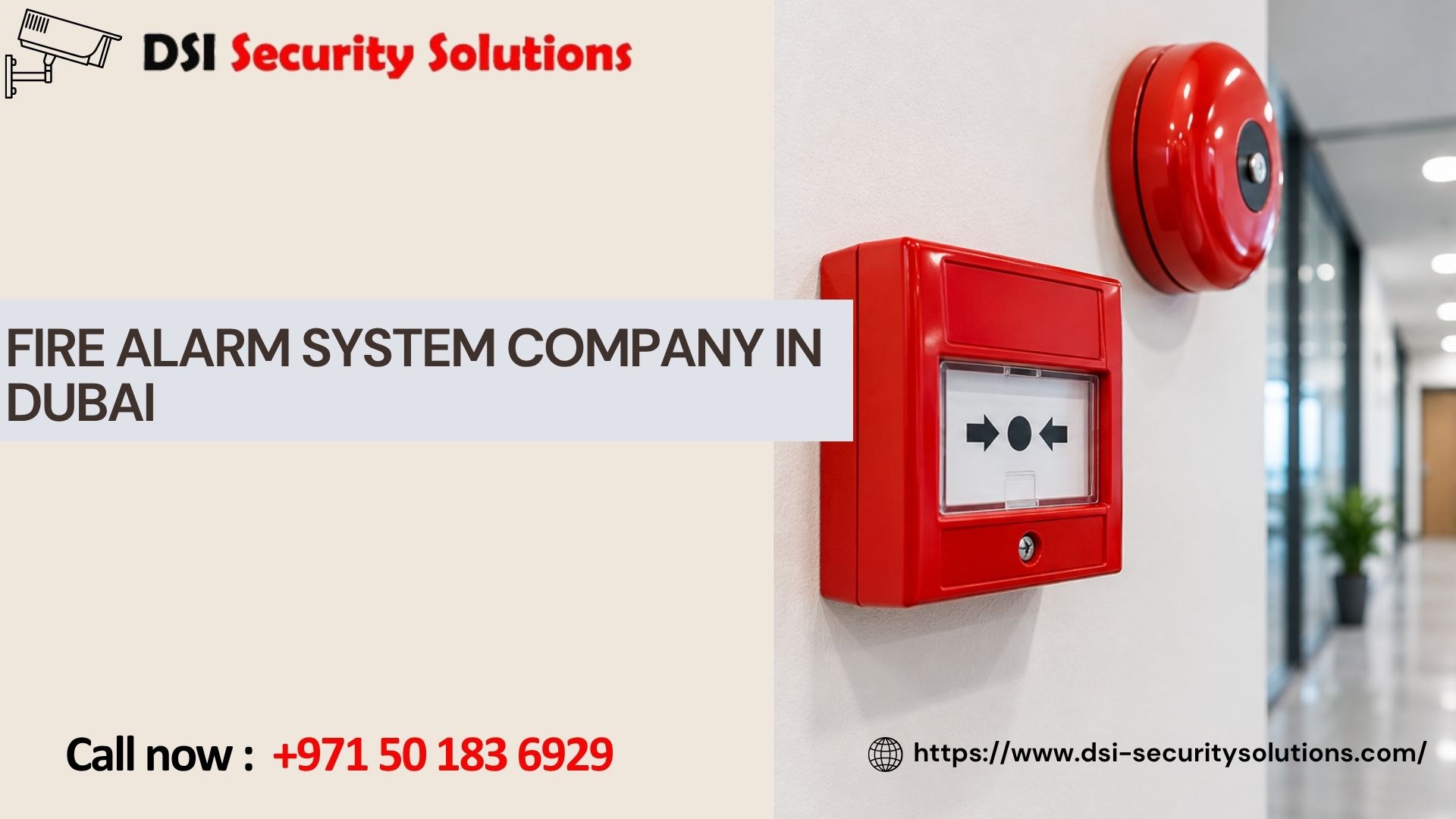
When a fire starts, every second counts. A properly designed fire alarm system detects danger early, alerts occupants and notifies emergency responders before a small incident becomes a disaster. As a fire alarm system company in Dubai, DSI Security Solutions helps property owners, facility managers and developers protect people, assets and business continuity with systems that are compliant, dependable and built for the UAE environment.
Whether you manage a high-rise tower in Business Bay, a warehouse in Al Quoz, a retail outlet in Deira or a villa in Arabian Ranches, we deliver fire alarm solutions matched to your building’s size, risk profile and regulatory obligations. Our service covers the full lifecycle: consultation, design, supply, installation, commissioning, testing and long-term maintenance.
Why Dubai Properties Need a Professional Fire Alarm System
Dubai’s skyline, dense commercial zones and year-round demand on cooling and electrical infrastructure create unique fire risks. Overloaded circuits, kitchen incidents, storage hazards and complex building layouts all raise the stakes. A quality fire detection and alarm system offers:
- Early warning: Smoke, heat and multi-sensor detectors identify fires in their earliest stage.
- Life safety: Sounders, strobes and voice alarms guide occupants to safe exits.
- Faster response: Integration with a monitoring panel helps emergency teams act quickly.
- Regulatory compliance: Dubai Civil Defence requires approved fire alarm systems in most commercial, industrial and residential buildings.
- Lower losses: Early detection limits property damage, downtime and insurance complications.
Choosing an experienced fire alarm installation company matters. Even the best equipment fails if it is designed poorly, installed carelessly or never maintained.
Our Fire Alarm System Services in Dubai
Fire Alarm System Design and Consultation
Every building is different. We begin with a site assessment and review of your drawings, occupancy type and evacuation needs. Our team then designs a detector layout, cabling route, zoning plan and panel configuration that meets Civil Defence requirements and relevant standards, while keeping costs sensible.
Supply and Installation
We supply and install fire alarm control panels, smoke detectors, heat detectors, manual call points, sounders, strobes and related devices from reputable manufacturers. Our technicians follow clean cabling practices and coordinate with other trades so your project stays on schedule.
Testing and Commissioning
After installation, we program, test and commission the full system. Each device is verified, cause-and-effect logic is checked and documentation is prepared to support Civil Defence inspection and approval.
Annual Maintenance Contracts (AMC)
A fire alarm system is only useful if it works when needed. Our AMC packages include scheduled inspections, functional testing, battery checks, fault diagnosis and detailed service reports. Regular maintenance also helps you meet ongoing compliance obligations.
Upgrades, Retrofits and Emergency Repairs
Older conventional panels, frequent false alarms or a building refit often call for an upgrade. We modernize existing systems, replace obsolete components and respond to faults so you’re not left unprotected.
Types of Fire Alarm Systems We Install
Choosing the right technology is one of the most important decisions in fire protection.
Conventional fire alarm systems divide a building into zones. When a detector activates, the panel shows which zone is affected. They suit smaller buildings, shops and simple layouts.
Addressable fire alarm systems give every device its own address, so the panel pinpoints the exact detector that triggered. Addressable systems are the usual choice for larger or more complex buildings such as towers, hotels, hospitals and malls. They also make troubleshooting faster.
Wireless fire alarm systems are useful for heritage structures, temporary sites and retrofit projects where new cabling would be disruptive or impractical.
Voice evacuation and PA integration adds clear spoken instructions during an emergency, which can improve response in large, multi-level or crowded buildings.
We can also integrate your alarm with fire suppression, sprinkler monitoring, access control, CCTV and building management systems for a coordinated safety strategy.
Key Components of a Fire Detection and Alarm System
A complete system typically includes:
- Fire alarm control panel (conventional or addressable)
- Smoke, heat, multi-sensor and beam detectors
- Manual call points (break glass units)
- Audible sounders, visual strobes and voice alarm speakers
- Repeater panels and graphic annunciators
- Interface modules for lifts, door release, HVAC shutdown and suppression systems
- Backup batteries and power supply units
Detector selection depends on the space. A kitchen, data room, car park and hotel corridor each need different sensing technology to reduce false alarms while keeping detection reliable.
Compliance With UAE and Dubai Fire Safety Regulations
Fire safety in Dubai is governed by Dubai Civil Defence and the UAE Fire and Life Safety Code of Practice, which references international standards such as NFPA and EN 54 for equipment and system design. Requirements vary by building type, height and use, so working with an installer who understands local approval procedures saves time and avoids costly rework.
Industries and Properties We Serve
Our fire alarm systems in Dubai protect a wide range of properties:
- Residential towers, villas and apartment communities
- Offices and commercial complexes
- Hotels and hospitality venues
- Retail stores, malls and restaurants
- Warehouses, factories and industrial units
- Schools, clinics and healthcare facilities
- Labour accommodation and mixed-use developments
Each sector has different occupancy patterns and risk factors, and our recommendations reflect that.
Why Choose DSI Security Solutions as Your Fire Alarm Partner
Local expertise. We understand Dubai’s building types, approval processes and climate-related challenges.
End-to-end service. From the first site visit to annual maintenance, one team handles the entire project, so there’s no confusion over who is responsible.
Quality equipment and workmanship. We use dependable, standards-compliant products and install them carefully to reduce faults and false alarms.
Clear communication. You get transparent quotations, realistic timelines and progress updates.
Integrated security. As a security solutions provider, we can combine fire alarm systems with CCTV, access control and other systems for a unified approach to protection.
Responsive support. Faults and emergencies need prompt attention, and our support team is ready to help.
Our Simple Installation Process
- Site survey and consultation: We assess your premises and understand your needs.
- Design and quotation: You receive a clear proposal with system layout and pricing.
- Installation: Our technicians install devices, cabling and panels with minimal disruption.
- Testing and commissioning: We test every component and prepare documentation.
- Approval support and handover: We assist with inspection requirements and train your staff.
- Ongoing maintenance: Scheduled AMC visits keep the system compliant and reliable.
What Affects Fire Alarm System Cost in Dubai?
There is no one-size-fits-all price. The main factors are building size and layout, number of detectors and devices, system type (conventional, addressable or wireless), cabling complexity, integration needs, and whether the project is a new installation or retrofit. Maintenance scope also affects long-term cost. A site survey gives the most accurate estimate, and we’re happy to provide a free, no-obligation quotation.
Frequently Asked Questions
Is a fire alarm system mandatory in Dubai?
In most cases, yes. Dubai Civil Defence requires fire detection and alarm systems in the majority of commercial, industrial, hospitality and residential buildings. Exact requirements depend on the building’s use, size and height, so consult a qualified fire alarm company before starting your project.
What is the difference between conventional and addressable fire alarm systems?
Conventional systems identify the affected zone, while addressable systems identify the exact device that was triggered. Addressable systems offer more precise location data and easier maintenance, making them better suited to larger or multi-level buildings.
How often should a fire alarm system be serviced?
Fire alarm systems should be inspected and tested regularly, typically under an Annual Maintenance Contract with scheduled visits. Your Civil Defence requirements and building type determine the frequency, and regular servicing helps ensure the system performs during an emergency.
How long does fire alarm installation take?
It depends on the building’s size and complexity. A small shop may take a few days, while a large tower or industrial facility can take several weeks or more. We’ll give you a timeline after the site survey.
Can you upgrade or replace my existing fire alarm system?
Yes. We assess your current setup and recommend whether to repair, expand or replace it. Upgrades often reduce false alarms, improve reporting and extend the life of your fire protection.
What causes false fire alarms, and how can they be reduced?
Common causes include dust, cooking fumes, steam, poor detector placement and lack of maintenance. Choosing suitable detector types, positioning them correctly and servicing them regularly all help reduce false alarms.
Do you provide fire alarm maintenance for systems installed by other companies?
In most cases, yes. We can inspect your existing system and propose an AMC that covers testing, servicing and repairs, subject to system condition and compatibility.
Can a fire alarm system be integrated with CCTV and access control?
Yes. Integration allows coordinated responses, such as releasing access-controlled doors during an alarm or giving security teams camera views of the affected area.