
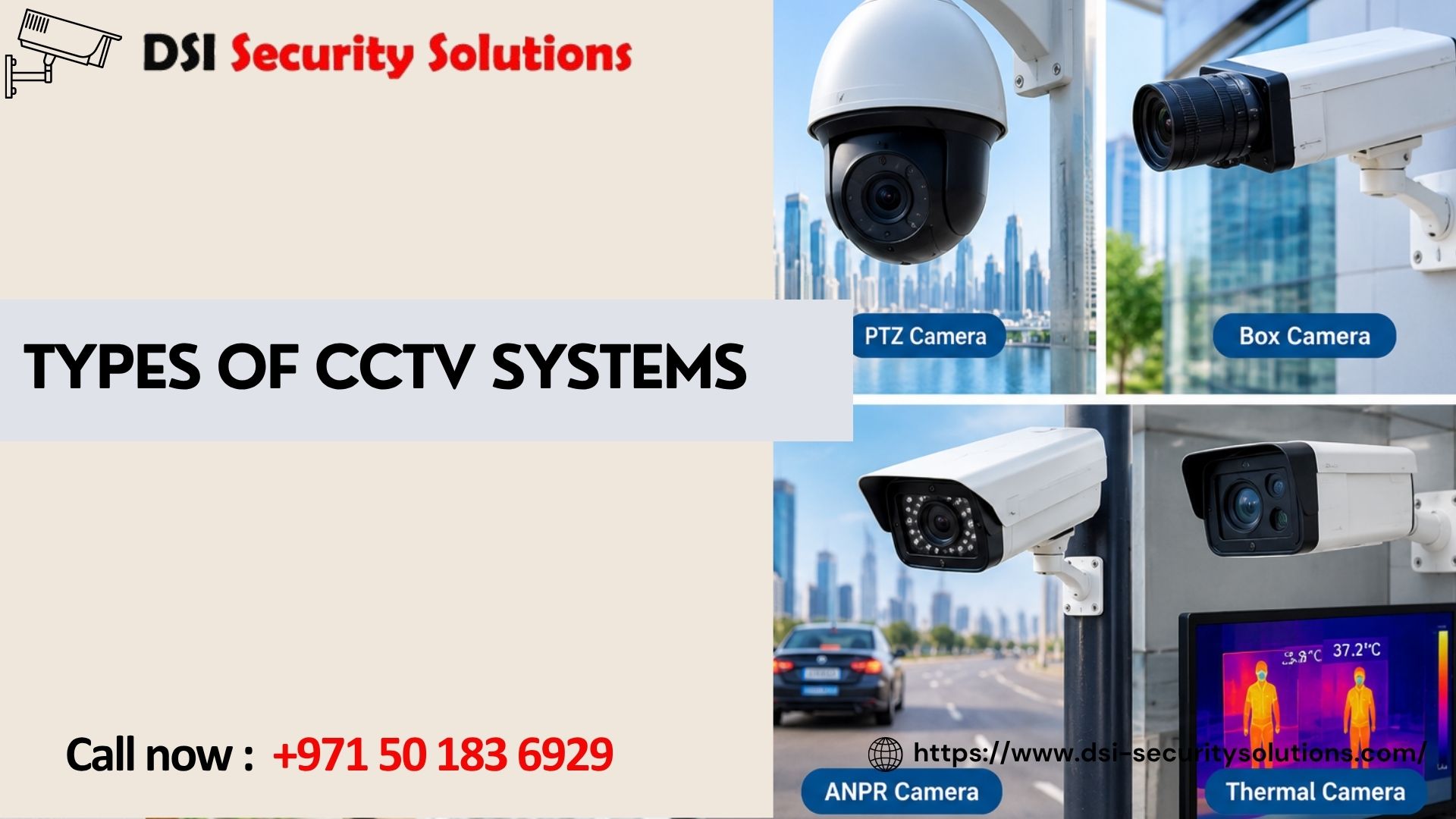
Types of CCTV Systems: A Complete Guide to Choosing the Right Surveillance Setup
Choosing a security camera setup is harder than it looks. Between analog and IP, wired and wireless, dome and bullet, the options can overwhelm even experienced property owners. The right choice depends on your property, budget, and what you need to protect.
This guide explains the main types of CCTV systems, how each works, where each performs best, and how to decide. By the end, you’ll know which setup suits your home, shop, warehouse, or office.
What Is a CCTV System?
CCTV stands for closed-circuit television. Unlike broadcast TV, the video feed goes only to a limited set of monitors or recording devices. A typical system has four parts:
- Cameras that capture video
- A recorder (DVR or NVR) or cloud storage that saves footage
- Cabling or wireless connections that carry the signal
- A monitor or mobile app for live viewing and playback
The technology behind these parts is what separates one type of system from another. The main types are covered below.
1. Analog CCTV Systems (AHD, HD-TVI, HD-CVI)
Analog systems are the traditional form of surveillance. Cameras send video over coaxial cable to a Digital Video Recorder (DVR), which converts and stores the footage.
Early analog cameras had poor picture quality, but modern HD analog formats such as AHD, HD-TVI, and HD-CVI deliver sharp 1080p to 4K images over existing coaxial cable.
Advantages
- Lower upfront cost than IP systems
- Easy to upgrade if coaxial cabling is already installed
- Reliable and simple to maintain
Limitations
- Fewer smart features and analytics
- Less scalable than network-based systems
- Power and video usually need separate runs unless you use power-over-coax
Best for: small shops, budget-conscious homeowners, and anyone upgrading an older analog installation.
2. IP CCTV Systems (Network Cameras)
An IP CCTV system sends digital video over a network, using Ethernet cables or Wi-Fi, to a Network Video Recorder (NVR) or cloud server. Each camera is effectively a small computer with its own processor and network address.
This is now the most popular choice for new installations, largely because of image quality. IP cameras commonly offer 4MP, 8MP (4K), and higher resolutions, which means clearer faces, number plates, and fine detail.
Advantages
- Superior resolution and image clarity
- Advanced features such as motion detection, line crossing, and facial recognition
- Easy to scale by adding cameras to the network
- Power over Ethernet (PoE) carries power and data on a single cable
Limitations
- Higher initial cost
- Requires proper network configuration and cybersecurity practices
Best for: offices, retail stores, hotels, schools, and any property where image quality and scalability matter.
3. Wireless CCTV Systems
Wireless CCTV systems transmit video over Wi-Fi rather than through video cables. The name is slightly misleading, because most wireless cameras still need a power source, whether a plug or a battery.
Advantages
- Flexible, fast installation
- Ideal where running cable is impractical
- Easy to relocate
Limitations
- Signal strength can be affected by walls, distance, and interference
- Battery models need regular charging or replacement
- Less dependable than wired setups for critical locations
Best for: rented properties, temporary sites, apartments, and areas where drilling is not possible.
4. Wired CCTV Systems
Wired systems, analog or IP, use physical cables for both video and power. They are widely seen as the most stable and secure option because they don’t depend on Wi-Fi signal quality.
Advantages
- Consistent, interference-free video
- Strong security against wireless hacking
- Better for large or multi-floor buildings
Limitations
- More labor-intensive installation
- Cable runs can be costly in older buildings
Best for: commercial buildings, factories, warehouses, and any location where reliability comes first.
5. Dome Cameras
Dome cameras take their name from their half-sphere housing. They are discreet, and because viewers can’t tell which way the lens points, they work as a visual deterrent. Many are vandal-resistant, which makes them a good fit for ceilings and entrances.
Best for: indoor retail, lobbies, corridors, and elevators.
6. Bullet Cameras
Bullet cameras have a long, cylindrical shape and are easy to spot. That visibility is often the point: it signals that the property is monitored. They typically offer strong long-range viewing and are often weatherproof.
Best for: outdoor perimeters, car parks, building exteriors, and driveways.
7. PTZ Cameras (Pan-Tilt-Zoom)
PTZ cameras can rotate horizontally, tilt vertically, and zoom in on a subject, either manually or automatically. One PTZ camera can cover an area that would otherwise take several fixed cameras, and many models can track moving people or vehicles.
Best for: large open areas, parking lots, industrial yards, stadiums, and active monitoring from a control room.
8. Turret and Eyeball Cameras
Turret cameras are similar to domes but sit on a ball-and-socket mount, which makes them easy to aim. Because the lens isn’t behind a dome cover, they’re less prone to infrared glare at night, giving cleaner low-light footage.
Best for: residential properties, small businesses, and entry points.
9. Night Vision and Infrared CCTV Cameras
Infrared (IR) cameras use built-in LEDs to capture clear black-and-white footage in total darkness. Newer models add full-color night vision that uses ambient light or a small built-in light source to keep color in the image.
Best for: any property that needs 24/7 monitoring, including gardens, perimeters, and warehouses.
10. 360-Degree Panoramic Cameras
Panoramic or fisheye cameras use a wide-angle lens to capture a full 360-degree view. Software can then “de-warp” the image into a normal view. They remove blind spots and can replace several cameras in open spaces.
Best for: showrooms, reception areas, restaurants, and open-plan offices.
11. Cloud-Based CCTV Systems
In a cloud CCTV system, footage is stored on remote servers instead of, or alongside, a local recorder. You can watch live or recorded video from anywhere using a smartphone or browser.
Advantages
- Footage stays safe even if the cameras or recorder are stolen
- Easy remote access and multi-site management
- Automatic updates and backups
Limitations
- Ongoing subscription fees
- Requires stable internet bandwidth
Best for: multi-branch businesses, property managers, and owners who travel often.
12. Smart and AI-Powered CCTV Systems
Modern surveillance goes beyond recording. AI-powered CCTV systems use analytics to detect people, vehicles, and unusual behavior, cutting down on false alarms from shadows, animals, or passing headlights. Common features include:
- Facial recognition
- Automatic number plate recognition (ANPR)
- Intrusion and line-crossing alerts
- People counting and heat mapping
Best for: retail analytics, access control integration, high-security facilities, and smart buildings.
Quick Comparison: Which CCTV System Is Right for You?
| System Type | Image Quality | Cost | Best Use |
|---|---|---|---|
| Analog (HD) | Good | Low | Small shops, budget upgrades |
| IP / Network | Excellent | Medium–High | Offices, retail, large sites |
| Wireless | Good | Medium | Rentals, flexible setups |
| Wired | Excellent | Medium | Commercial, critical areas |
| PTZ | Excellent | High | Large outdoor areas |
| Cloud-Based | Excellent | Subscription | Multi-site, remote access |
How to Choose the Right Type of CCTV System
Consider these factors before you buy.
1. Purpose of surveillance. Are you deterring theft, monitoring staff, protecting a home, or identifying faces and number plates? Detail-heavy goals call for higher resolution.
2. Indoor or outdoor use. Outdoor cameras need weatherproof ratings, typically IP66 or higher, to resist dust, rain, and heat.
3. Lighting conditions. Poorly lit areas need strong infrared or color night vision.
4. Coverage area. Large, open spaces suit PTZ or panoramic cameras. Narrow corridors suit fixed domes or bullets.
5. Storage needs. Higher resolution and more cameras mean more storage. Decide how many days of footage you need to keep, whether on a local recorder, in the cloud, or both.
6. Budget and growth. Analog is cheaper now, but IP systems expand more easily. If you expect to add cameras later, IP is usually the smarter long-term investment.
7. Professional installation. Camera placement, angles, cabling, and network setup have a major effect on performance. A well-planned system with mid-range cameras often beats an expensive one installed poorly.
Why Professional CCTV Installation Matters
Even the best equipment underperforms if it’s installed incorrectly. A professional security provider will survey your property, identify blind spots, recommend suitable cameras, and make sure the system is configured securely, with strong passwords, encrypted connections, and reliable remote access.
At DSI Security Solutions, we help homes and businesses choose and install surveillance systems tailored to their layout, risks, and budget. From initial consultation to maintenance and support, our goal is a system that works reliably for years.
Frequently Asked Questions About Types of CCTV Systems
What are the main types of CCTV systems?
The main types are analog (HD) systems, IP network systems, wireless systems, and wired systems. Cameras within these systems come in different styles, including dome, bullet, PTZ, turret, and 360-degree panoramic. Cloud-based and AI-powered options add remote access and smart analytics.
Which type of CCTV system is best for home use?
For most homes, a wired or wireless IP system with dome or turret cameras works well. They offer clear footage, mobile app access, and easy expansion. Renters may prefer wireless cameras because they are quick to install and easy to remove.
What is the difference between analog and IP CCTV systems?
Analog systems send video over coaxial cable to a DVR, while IP systems send digital video over a network to an NVR or the cloud. IP cameras generally provide higher resolution, better analytics, and more flexibility. Analog systems usually cost less upfront.
Are wireless CCTV cameras reliable?
They can be, with a strong, stable Wi-Fi signal and correct placement. For critical areas or large buildings, wired systems are generally more dependable because they are not affected by interference or signal drops.
What is the difference between a DVR and an NVR?
A DVR processes video at the recorder and is used with analog cameras. An NVR records video that has already been processed by the camera and is used with IP cameras. NVR systems typically support higher resolution and more advanced features.
Which CCTV camera is best for night vision?
Cameras with infrared LEDs or full-color night vision perform best in low light. Turret cameras often give cleaner night images than domes because there’s no dome cover to cause infrared reflections.
How many cameras do I need?
It depends on the size and layout of your property. A small home may need 2 to 4 cameras covering entrances and key access points, while a larger commercial site may need dozens. A site survey is the most accurate way to find out.
Can CCTV systems be viewed remotely?
Yes. Most modern IP and cloud-based systems let you watch live and recorded footage from a smartphone, tablet, or computer, provided the system is connected to the internet.
How long is CCTV footage stored?
It depends on storage capacity, camera resolution, recording mode, and compression. Many businesses keep 15 to 30 days of footage, though requirements vary by industry and local regulations.
Should I choose cloud or local CCTV storage?
Local storage avoids monthly fees and keeps data on-site. Cloud storage protects footage from theft or damage and simplifies remote access. Many users combine both for the best protection.
Final Thoughts
There is no single best CCTV system for everyone. Analog suits tight budgets, IP delivers the best image quality and scalability, wireless offers flexibility, and cloud and AI features add remote access and smarter monitoring. The right choice comes down to your property, your goals, and your budget.